Can you take vitamin B12 with blood pressure medication?

Medically reviewed by: Dr. Alexandra Christiansen, MD
Written by: Levan Maglakelidze
Helimeds’ Fact-Checking Standards. Every piece of content at Helimeds adheres to the highest editorial standards for language, style, and medical accuracy. To learn what we do to deliver the best health insights to you, check out our content review principles.

Usually, yes. Plain oral vitamin B12 can generally be taken with common high blood pressure medicines. Having high blood pressure does not, by itself, mean you need to avoid B12. The important checks are the exact prescription you take, everything in the B12 product, and whether you need supplementation.
A B12-only tablet is different from a B-complex supplement, a caffeinated "energy" drink, or a compounded injection containing several ingredients. Those differences can change the safety assessment.
Keep taking your blood pressure medicine as prescribed. Before adding B12, show the product label and your medication list to a pharmacist or licensed clinician. They can check the combination and help determine whether B12 addresses your actual concern, especially if you are considering it for fatigue.
What determines whether the combination is appropriate?
The exact blood pressure medicine matters
"Blood pressure medication" describes several drug groups, including ACE inhibitors, angiotensin receptor blockers, calcium channel blockers, beta blockers, and diuretics. These medicines work differently and have different precautions.
Plain B12 is not generally considered a major interaction concern with commonly prescribed medicines in these groups. However, that broad reassurance does not establish that every supplement is appropriate with every prescription. Your pharmacist needs the medication's actual name, rather than a description such as "my water pill" or "the small white tablet."
Combination prescriptions deserve attention because one tablet may contain two blood pressure medicines. People also sometimes take medicines for other heart conditions alongside hypertension treatment. A review should include those prescriptions, not just the one you identify as your blood pressure medicine.
You do not need to interrupt effective hypertension treatment while seeking this information. The American Heart Association's guidance on managing blood pressure medications emphasizes working with your healthcare professional rather than changing treatment on your own.
The entire B12 product matters
Read the Supplement Facts panel, not just the large "B12" wording on the front. A product may also contain other B vitamins, minerals, caffeine, or herbal ingredients. A safety answer about B12 alone cannot automatically apply to that mixture.
Our guide to combining B12 and B-complex supplements explains how to check overlapping ingredients.
For example, potassium in a combination supplement may matter for someone taking a medicine that affects potassium levels, especially if they also have kidney disease. A stimulant-containing energy product raises different questions from a plain vitamin tablet.
Also distinguish an ingredient's biological role from a product's promised result. B12 helps normal nerve function and red blood cell formation, but that does not establish that an "energy" blend treats tiredness or improves blood pressure.
Check the whole product, not just the vitamin named on the front.
Being water-soluble does not make a vitamin product automatically interaction-free. Safety depends on the ingredients, amounts, route, and person's health conditions, rather than that description alone.
Do you need B12, and what can it actually help?
Treating a deficiency has a clear purpose
Vitamin B12 is essential for healthy nerves, blood cells, and DNA production. When someone has a deficiency, replacing the missing vitamin can treat the deficiency and help prevent further harm.
Possible symptoms include fatigue, weakness, a sore tongue, numbness or tingling, and problems with balance or memory. These symptoms have many possible causes, so none confirms B12 deficiency by itself. Nerve-related symptoms deserve assessment even when a person has not been told they have anemia.
The NIH Office of Dietary Supplements' vitamin B12 fact sheet explains B12's functions, food sources, deficiency risks, and medication considerations. It also distinguishes the need to correct a deficiency from claims that extra B12 boosts energy in people who already get enough.
If testing shows a deficiency, the next question is why it developed. Low dietary intake and difficulty absorbing B12 may require different long-term approaches. A supplement choice should therefore follow the cause and severity of the problem, not simply the size of the amount advertised on a bottle.
Fatigue does not automatically mean low B12
If you are considering B12 because you feel tired after starting blood pressure treatment, tell the prescribing clinician when the fatigue began. Some medicines can contribute to tiredness, but sleep problems, anemia, thyroid conditions, infection, depression, and other issues can also cause it.
Adding a vitamin without looking at the timing may delay finding the cause. It may also make it harder to tell whether a medication adjustment or another evaluation is needed.
Useful details include whether the tiredness started after a new prescription or dose change, whether you feel lightheaded on standing, and what your home blood pressure readings show. Mention shortness of breath, palpitations, numbness, or a change in exercise tolerance as well.
Do not stop the prescription or compensate with stimulants. A clinician can evaluate possible medication side effects while keeping blood pressure treatment on track. If B12 deficiency is a reasonable concern, they can decide which blood tests are appropriate.
B12 does not replace blood pressure treatment
B12 supplementation is not an established substitute for antihypertensive medication, a heart-healthy eating pattern, physical activity, or other recommended hypertension care.
You may see claims linking B vitamins, blood pressure, and homocysteine, a substance measured in some blood tests. A vitamin's effect on a laboratory marker does not automatically establish that taking it will control blood pressure or prevent a cardiovascular event.
Similarly, research about folate or a combination of B vitamins cannot be treated as proof that B12 alone has the same effect. Different nutrients, study populations, and outcomes answer different questions.
If your B12 level is low, correcting it can be important while you continue appropriate hypertension care. Those are compatible goals. Taking more B12 than you need is not a reliable way to improve a blood pressure reading.
Medicines and health conditions worth discussing
Metformin and acid-reducing medicines can affect B12 status
Sometimes the relevant medication issue is not a harmful combination. Instead, a medicine can contribute to lower B12 levels over time.
Metformin, commonly used for type 2 diabetes, can reduce B12 absorption. Long-term use of certain acid-reducing medicines can also interfere with the body's ability to obtain B12 from food. The NIH fact sheet identifies these as important medication considerations.
These medicines are not interchangeable with blood pressure drugs. Someone may take them together because they have several health conditions, which is why a complete medication review is more useful than checking only one prescription.
Tell your clinician if you take metformin or regularly use prescription or over-the-counter acid reducers, particularly if you have fatigue, anemia, or nerve symptoms. Do not stop those medicines on your own. The appropriate response may involve testing or a replacement plan rather than discontinuing useful treatment.
Diet, digestive conditions, and surgery can change the need for treatment
B12 occurs naturally in foods such as fish, meat, poultry, eggs, and dairy products. Fortified foods can also provide it. People who eat little or no animal-derived food need a dependable B12 source, which may include fortified foods or supplementation.
Absorption problems can occur even when someone's diet contains B12. Pernicious anemia, certain digestive disorders, and some stomach or intestinal operations can affect the body's ability to absorb it.
That distinction matters when comparing food, oral supplements, and prescription treatment. Eating more B12-containing foods may help someone whose intake is inadequate, but it may not solve a significant absorption problem.
Bring any history of bariatric surgery, stomach surgery, digestive disease, or previous B12 deficiency to the conversation. MedlinePlus information on vitamin B12 provides additional background on dietary sources and deficiency. A clinician can connect that general information with your symptoms and medical history.
Kidney disease also warrants a careful review of the full supplement. The concern may involve added minerals or other ingredients rather than B12 itself.
Our guide to B12 injection frequency explains how the cause of deficiency affects an ongoing replacement plan.
Oral B12, B-complex products, and injections are different choices
A product's route and composition affect what needs checking. An oral dietary supplement and a prescription injectable preparation should not be treated as equivalent simply because both contain B12.
| Product type | What it contains or involves | What to clarify |
|---|---|---|
| B12-only oral supplement | B12 in a tablet, capsule, liquid, or other oral form | Whether supplementation is needed and whether the product fits your medication list |
| B-complex or multivitamin | B12 plus other vitamins and sometimes minerals | The amount of every ingredient and overlap with other supplements |
| Energy drink or wellness blend | May combine B12 with caffeine, herbs, or other substances | Ingredients that may affect blood pressure, heart rate, or prescription medicines |
| Prescription B12 injection | An injectable medicine used when clinically appropriate | The reason for the injection, exact product, and required follow-up |
| Compounded multi-ingredient injection | A pharmacy-prepared combination that may include B12 | Every active ingredient, the clinical rationale, dispensing instructions, and uncertainties |
Oral forms do not require an invented spacing rule
There is no universal requirement to separate plain oral B12 from all blood pressure medicines by a set number of hours. Follow the directions for your prescription and the specific B12 product, and have a pharmacist resolve any conflict.
Some blood pressure medicines have their own food or timing instructions. A supplement should fit around those instructions rather than become a reason to change a working prescription schedule.
Moving an energy blend to another time of day does not necessarily remove an interaction. Likewise, swallowing products several hours apart cannot reliably fix a problem caused by an added ingredient's effects on blood pressure.
Different oral B12 products may contain cyanocobalamin or methylcobalamin. The ingredient name alone does not establish that one product is more suitable for someone with hypertension. The reason for treatment, full formulation, and recommended amount remain more important than marketing terms.
An injection needs its own assessment
A B12 injection may be appropriate for certain deficiencies or absorption problems, but high blood pressure alone is not a reason to choose injections over oral treatment. An injection is also not automatically more effective for unexplained fatigue.
Prescription injections require product-specific instructions and clinical oversight. If a clinician recommends one, confirm what condition it is treating and how response will be assessed. Tell the clinician about medication allergies and any previous reaction to an injection.
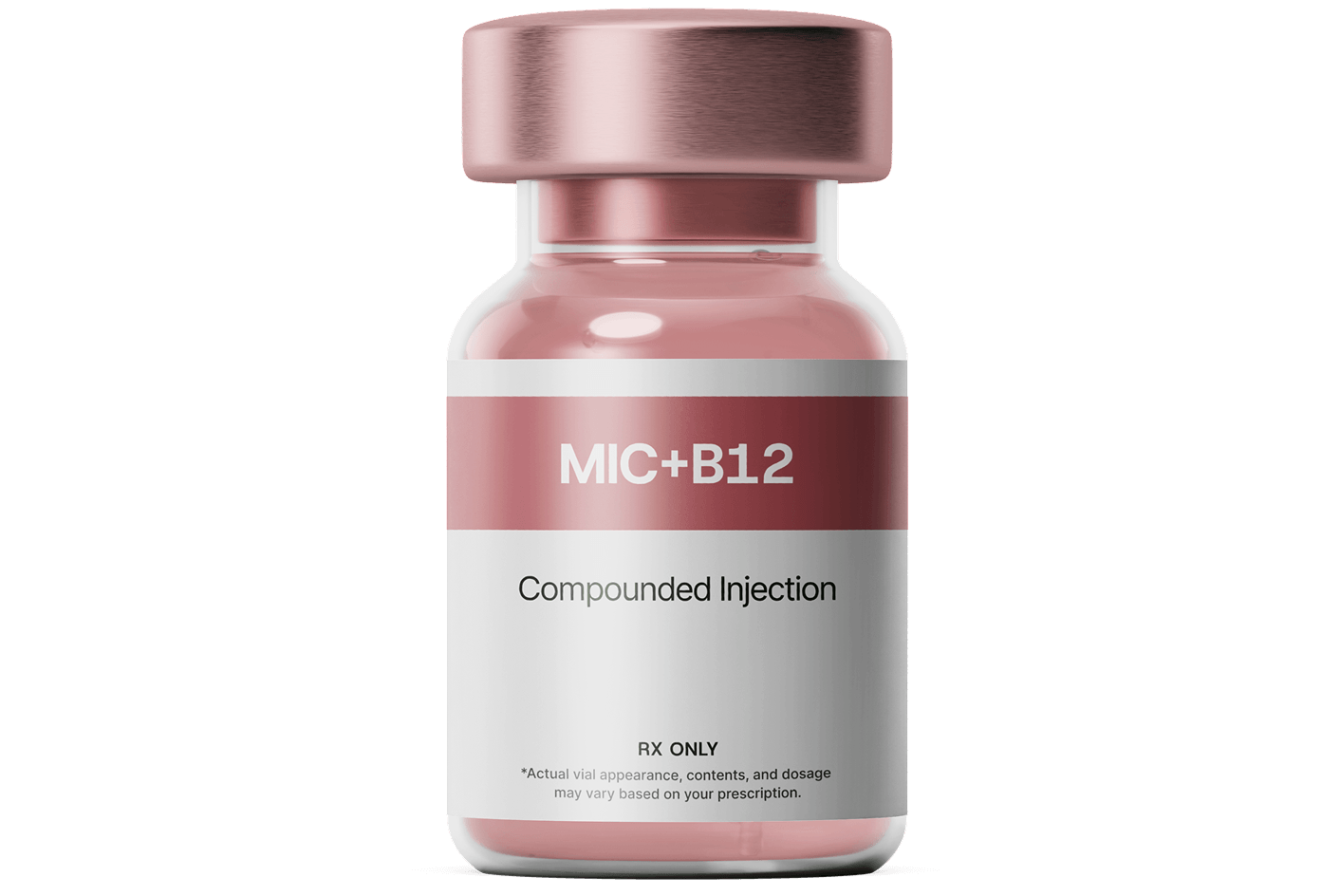
Compounded MIC+B12 is a separate multi-ingredient preparation containing methionine, inositol, choline, and methylcobalamin. It should not be treated as plain B12 replacement or assumed to have the same evidence as an approved B12 medicine.
Compounded drugs are not FDA-approved, and the FDA does not review their safety, effectiveness, and quality before marketing. B12's normal role in metabolism does not establish that a compounded combination improves energy, produces weight loss, or is suitable alongside your prescriptions. Those questions require assessment of the actual preparation and clinical need.
Our overview of MIC+B12 ingredients and evidence explains why a combination shot needs a separate assessment.
How to check your combination before starting
A pharmacist can often help answer the immediate interaction question. A clinician is needed when the reason for supplementation, new symptoms, testing, or treatment selection requires evaluation.
Prepare the following information:
- The names and strengths of all prescription medicines, including combination blood pressure tablets.
- A photo of the B12 product's front label and complete Supplement Facts or prescription label.
- Other vitamins, minerals, herbal products, energy drinks, and over-the-counter medicines you use.
- Why you want B12, including any previous deficiency diagnosis or laboratory results.
- Relevant conditions, such as kidney disease, digestive disease, or prior stomach surgery.
- Recent home blood pressure readings and the timing of symptoms or medication changes.
Ask a focused question: "Is this exact product appropriate with my medicines, and is there a reason I need it?" That invites both an interaction check and a discussion of whether the supplement is useful.
If you already take several products, check for overlapping ingredients. A multivitamin, B-complex tablet, and energy drink may all provide B12 and other nutrients. Combining them can add ingredients you did not intend to take, even when each product looks familiar.
If testing is planned, tell the clinician whether you have already started B12 and when. Supplement use can affect the interpretation of laboratory results. Do not delay care for concerning symptoms while trying to arrange an ideal testing schedule.
For a prescription injection, questions about the intended treatment belong with the prescriber. Questions about the dispensed preparation, concentration, or unclear administration instructions should be resolved with the dispensing pharmacist before use.
Our guide to B12 injection doses explains what to confirm on a prescription and vial label.
What if you notice dizziness or a change in blood pressure?
A symptom that appears after taking a supplement deserves attention, but timing alone does not prove B12 caused it. Blood pressure can vary with activity, stress, illness, caffeine, measurement technique, and medication use.
If you feel mildly lightheaded, sit down somewhere safe and avoid driving until it resolves. If you can safely check your blood pressure, record the result along with the symptom, time, and products taken. Follow any existing action plan your clinician has provided.
Contact the prescribing clinician for repeated dizziness, unusually low readings for you, or a sustained change from your usual pattern. A pharmacist can also review a newly added supplement for overlooked ingredients. Do not take extra blood pressure medicine, skip doses, or increase B12 to correct a reading without instructions.
A useful symptom record includes:
- What you felt and whether it happened at rest or after standing.
- Your blood pressure and pulse, if measured safely.
- When you took prescriptions, supplements, caffeine, and other products.
- Any recent illness, vomiting, diarrhea, or reduced fluid intake.
- Whether the problem has happened more than once.
A new symptom needs assessment; it is not proof that a supplement is working or that your prescription should be changed.
Chest pain, severe shortness of breath, fainting, new one-sided weakness, trouble speaking, or sudden vision changes require urgent medical attention. Call 911 for an immediate medical emergency in the U.S. Trouble breathing or swelling of the lips, tongue, or throat after any product also warrants emergency help.
Do not attribute serious symptoms to an ordinary vitamin adjustment. They need prompt evaluation regardless of whether you recently started B12.
The bottom line
Plain oral vitamin B12 is generally compatible with common blood pressure medicines. The most useful next step is to confirm the exact prescription and full supplement label with a pharmacist, then address why you want B12.
If you have a documented deficiency, a clinician can recommend replacement suited to its cause. If you are seeking help for fatigue, dizziness, or changing blood pressure readings, bring a symptom record and medication list rather than assuming a vitamin will solve the problem. Continue prescribed hypertension treatment unless your treating clinician gives different instructions.
For a possible compounded MIC+B12 pathway, review how care through Helimeds works before beginning consultation; prescribing depends on clinical assessment and state availability.
This article provides general health information and does not replace advice from your licensed healthcare professional.
Frequently asked questions
Can I take B12 at the same time as my blood pressure pill?
Plain oral B12 does not have a universal spacing requirement with blood pressure medicines. Follow your prescription's instructions and ask a pharmacist to check the exact combination, especially if the supplement contains additional ingredients. Changing the timing does not necessarily prevent an interaction.
Will B12 lower my blood pressure too much?
Plain B12 is not an established blood pressure-lowering treatment, so it should not be expected to act like an additional antihypertensive medicine. If you develop dizziness or lower-than-usual readings, seek a review of your medicines, supplement ingredients, and other possible causes. Do not adjust your prescription on your own.
Is B-complex as safe as B12 alone with hypertension medicine?
A B-complex product needs a separate assessment because it contains several vitamins and may include other ingredients. Safety depends on their amounts, your prescriptions, and your health conditions. Show the complete label to a pharmacist rather than relying on an interaction answer about B12 alone.
Should I have a B12 test before taking a supplement?
Testing may be useful if you have symptoms, a history of deficiency, dietary risk, absorption problems, or medicines that can affect B12 status. It is not automatically necessary for every person considering a supplement. A clinician can decide whether testing would clarify the need for treatment, and you should disclose any B12 you already take.
History
Current Version
Written by Levan Maglakelidze
Medically reviewed by Dr. Alexandra Christiansen, MD