How long do vitamin B12 injections take to work?

Medically reviewed by: Dr. Alexandra Christiansen, MD
Written by: Levan Maglakelidze
Helimeds’ Fact-Checking Standards. Every piece of content at Helimeds adheres to the highest editorial standards for language, style, and medical accuracy. To learn what we do to deliver the best health insights to you, check out our content review principles.

Vitamin B12 injections can begin correcting a deficiency before you feel a difference. If low B12 is causing your symptoms, improvement may become noticeable over days to weeks, while fuller recovery can take months. Numbness, tingling, balance problems, and other nerve-related symptoms may take longer to improve and sometimes do not fully resolve.
There is no dependable promise of an energy boost within 24 hours. Your response depends on whether you have a deficiency, what caused it, and which symptoms you are treating. If your B12 level is adequate, an injection has no established benefit for increasing energy.
The most useful distinction is between replacing the missing vitamin and recovering from its effects. Those happen on different timelines.
What “working” means after a B12 injection
Absorbing the vitamin happens before symptom recovery
Vitamin B12 helps your body make healthy red blood cells and maintain nerve function. An injection bypasses the digestive steps needed to absorb B12 from food. Cyanocobalamin injections, for example, may be given into a muscle or under the skin, depending on the prescribed product. They are not ordinarily injections directly into a vein.
Our overview of vitamin B12 benefits and side effects provides background on its roles, replacement, and safety.
Once B12 becomes available, your body can use it to correct processes affected by deficiency. But making healthy blood cells and recovering nerve function take time. Rapid delivery does not mean an immediate change in how you feel.
That distinction matters if you have had your first injection and are still tired the next morning. A lack of immediate improvement does not, by itself, show that treatment has failed. Likewise, feeling better immediately does not establish that B12 deficiency was the cause of your fatigue.
Different symptoms can improve at different speeds
Recovery is not one event. A person may notice better stamina while tingling remains unchanged, or laboratory findings may improve before everyday activities feel easier.
| What you are assessing | What improvement can mean | What it cannot establish alone |
|---|---|---|
| Fatigue and stamina | Daily tasks may gradually feel less exhausting if deficiency contributed | Whether B12 explains every cause of tiredness |
| Anemia | Follow-up blood counts may show recovery in red blood cell production | Whether nerve symptoms have resolved |
| Numbness, tingling, or balance | Nerve-related symptoms may improve more slowly | That persistent or worsening symptoms are safe to ignore |
| Blood B12 concentration | The result may reflect recent replacement | Whether you have fully recovered or still need the same treatment |
The NIH Office of Dietary Supplements explains that B12 deficiency can affect both blood cells and the nervous system. Nerve problems can occur even without anemia, so a normal blood count does not rule out every consequence of deficiency.
A higher B12 blood level and feeling fully recovered are different measures of treatment response.
Why your recovery timeline may be different
The cause determines what treatment needs to accomplish
Low intake and poor absorption are different problems. Someone who gets little B12 from food may need a reliable dietary or supplement source. Someone whose digestive system cannot absorb enough may need a longer-term replacement plan.
Vitamin B12 occurs naturally in animal-derived foods, and some plant-based foods are fortified with it. A vegan eating pattern requires a dependable source from fortified foods or supplements, but following a vegan diet does not automatically mean injections are necessary.
Our guide to vitamin B12 intake and dosage for adults distinguishes daily nutritional needs from deficiency treatment.
Absorption problems can occur with certain digestive conditions or after some stomach and intestinal operations. Pernicious anemia involves a problem with intrinsic factor, a protein needed for normal B12 absorption. Some medicines, including metformin and stomach-acid-reducing medicines, can also contribute to low B12 over time.
These factors help explain why treating vitamin B12 deficiency involves more than choosing how often to receive a shot. Your clinician needs to identify whether the underlying problem is temporary, correctable, or ongoing. Do not stop a prescribed medicine because it may affect B12; bring it into the treatment discussion.
Severity, duration, and other conditions affect the result
A recent deficiency without substantial symptoms is different from a long-standing deficiency with anemia or nerve damage. Treatment can replace B12, but it cannot guarantee that every effect of a prolonged deficiency will reverse.
The NIH health professional fact sheet on vitamin B12 describes potentially irreversible neurological effects of deficiency. This is a reason to evaluate symptoms promptly, not a reason to assume persistent tingling means permanent injury.
Other conditions can also limit how much better you feel after treatment. Iron deficiency, thyroid disease, sleep apnea, depression, and medication effects can contribute to fatigue. More than one problem may be present at the same time.
If your blood count improves but your exhaustion does not, the next question may be whether something else needs attention. It does not automatically mean you need a larger dose or more frequent injections.
What to expect from treatment for fatigue and nerve symptoms
Fatigue may improve gradually rather than as a burst of energy
When B12 deficiency causes anemia, the blood has reduced capacity to carry oxygen effectively. Correcting the deficiency allows healthy red blood cell production to recover. As that happens, weakness, reduced exercise tolerance, and fatigue may ease.
Practical improvement can be subtle. You may find that ordinary tasks require fewer breaks or that you can concentrate for longer. Those observations can be more useful than trying to detect a dramatic sensation after each injection.
B12 is not a stimulant. It does not act like caffeine, and treatment is not intended to create a rush. Poor sleep, illness, stress, and daily activity can still affect energy during recovery.
If fatigue is interfering with work, driving, or basic activities, tell your clinician how much it limits you. Do not wait for a promised online timeline to pass before reporting a substantial problem.
Nerve-related symptoms need closer attention
Tingling, numbness, changes in walking, and balance problems deserve particular attention because they can reflect nervous system involvement. They can also have causes unrelated to B12.
Recovery may be slower than improvement in anemia, and some symptoms may persist. That uncertainty makes symptom tracking and follow-up important. A blood result alone cannot show whether your walking or sensation is getting better.
Report new or worsening weakness, loss of coordination, or difficulty walking promptly. Do not assume worsening symptoms are a normal “healing reaction” or evidence that the injection is working.
Sudden symptoms require a different response. Sudden one-sided weakness, facial drooping, or trouble speaking could indicate a stroke rather than a vitamin problem. Call 911 for these symptoms.
Confirming deficiency is more useful than chasing an energy boost
Feeling tired does not establish that you need B12 injections. Fatigue and difficulty concentrating occur in many conditions, and treating the wrong explanation can delay useful care.
Our explanation of why people take vitamin B12 shots examines deficiency treatment separately from general wellness goals.
A clinician may review your symptoms, diet, medications, digestive history, and blood tests. Testing can include a blood count and a B12 measurement. In some situations, additional testing helps clarify an uncertain result or investigate the cause.
Tell the clinician about B12 supplements and injections you have already used. Recent replacement can affect how blood results are interpreted. When possible, a diagnostic evaluation begins before treatment, although urgent symptoms may require treatment without waiting for every result.
Useful information to bring includes:
- When fatigue, tingling, memory concerns, or balance changes began.
- Whether symptoms are stable, improving, or worsening.
- Previous laboratory reports, including the laboratory’s reference ranges.
- Your usual sources of B12, including fortified foods and supplements.
- Any history of stomach or intestinal surgery, digestive disease, or pernicious anemia.
- All prescription medicines, over-the-counter products, and supplements you use.
- The exact name and ingredients of any injection you have received.
A low or borderline result needs context. Avoid comparing one number with someone else’s online result without considering the test, symptoms, and treatment history.
If you do not have a deficiency, additional B12 has no established benefit for improving energy or endurance. Its essential role in normal metabolism does not mean that taking more makes metabolism faster. Persistent fatigue deserves evaluation rather than an indefinite series of wellness shots.
How injections compare with oral B12 and combination shots
Injections are one treatment route, not a universal upgrade
Oral B12 can be appropriate for some people with deficiency. Injections may be selected when absorption is a concern, symptoms are significant, or the clinical situation calls for a more reliable replacement route.
The decision depends on more than convenience. Your clinician considers the cause of deficiency, symptom severity, ability to follow treatment, and response over time. Some people need ongoing replacement because the underlying absorption problem remains.
It is not useful to assume that a shot will make everyone feel better faster than a pill. Both routes require an appropriate treatment plan, and neither removes the time needed for recovery.
If injections are difficult to access or uncomfortable, ask whether oral B12 is a reasonable option for your situation. Do not substitute an over-the-counter product or change routes independently, particularly when treatment began for significant neurological symptoms.
The B12 form and the complete formulation matter
Cyanocobalamin, hydroxocobalamin, and methylcobalamin are different forms of B12. The name alone does not establish that one will produce faster symptom relief for you. A description such as “active form” is not evidence of a superior energy effect.
The complete product also matters. A standalone B12 injection and a compounded combination injection are different preparations. You cannot assume that they have the same ingredients, instructions, or evidence.
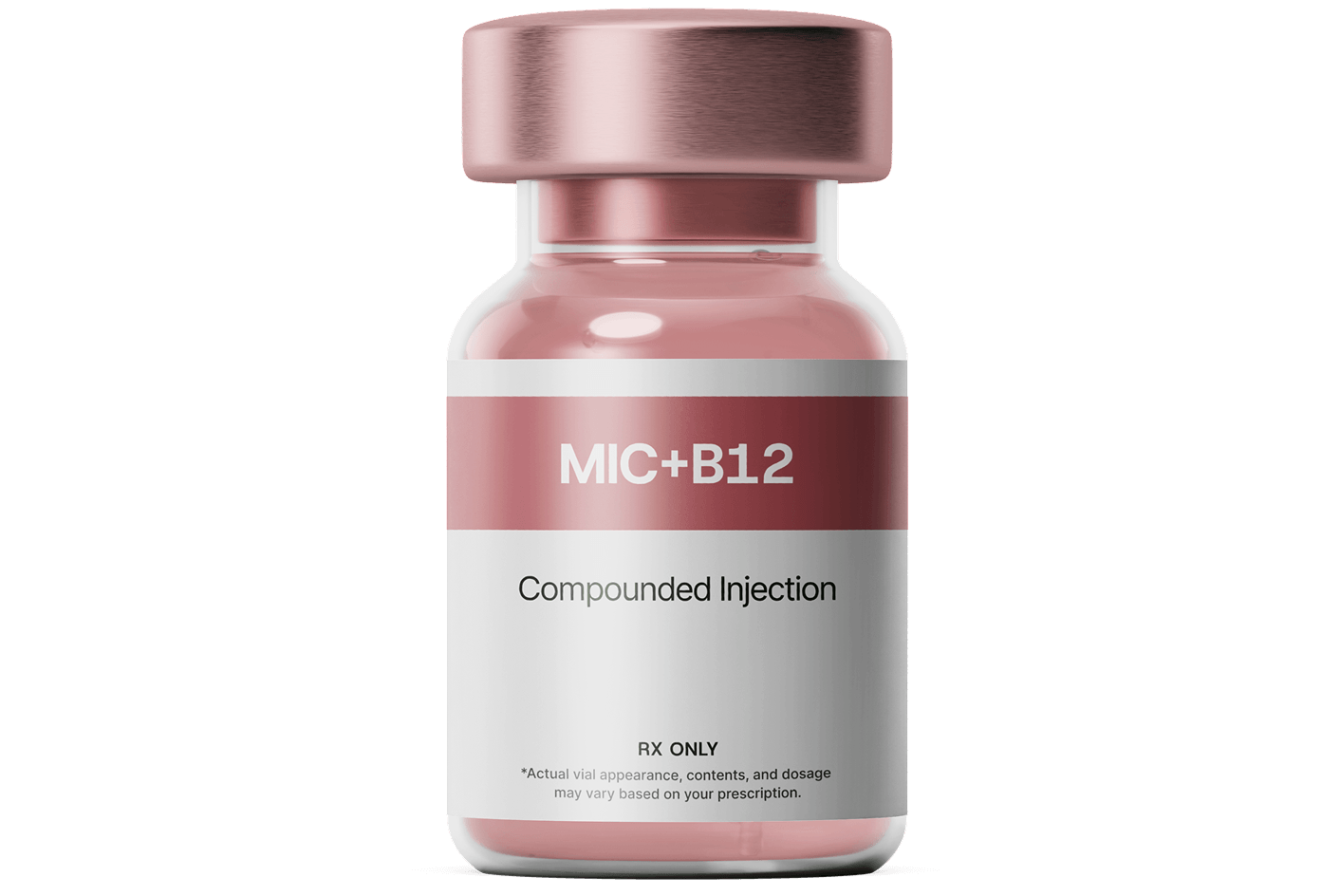
Helimeds lists compounded MIC+B12, which contains methionine, inositol, choline, and methylcobalamin. It should not be treated as interchangeable with a standalone B12 product prescribed to correct deficiency. Evidence about B12 replacement does not establish that this combination improves energy, causes weight loss, or speeds recovery.
Our guide to MIC+B12 ingredients and evidence explores the distinction between an ingredient's biological role and demonstrated benefits of the combination.
Compounded medicines are not FDA-approved. The FDA does not review their safety, effectiveness, and quality before marketing. The FDA’s explanation of compounding describes this distinction.
If you are considering a compounded MIC+B12 consultation, first clarify the clinical goal and whether deficiency testing is needed. Through Helimeds, medical intake is followed by licensed-provider review; a prescription is possible only when clinically appropriate and permitted in your state, with fulfillment handled separately through a licensed pharmacy.
How to tell whether treatment is helping
Track function as well as how you feel
A brief record can help you and your clinician recognize a trend without overinterpreting a single good or bad day. Choose observations related to the symptoms that led to treatment.
For example, record whether you can complete a routine walk without extra rest, whether tingling is changing, or whether balance is affecting stairs. Include injection dates and any new symptoms. There is no need to monitor yourself constantly or create a complicated scoring system.
Follow-up blood tests may be useful, particularly when anemia was present. Your clinician should choose the tests and timing based on the diagnosis and treatment. Repeating a B12 concentration after every injection is not a substitute for assessing symptoms and function.
Ask what improvement is expected in your specific case and when the treatment plan should be reviewed. A clear follow-up plan is more useful than being told simply to “give it time.”
No improvement should lead to reassessment
If you are not improving as expected, contact the prescribing clinician. Reassessment may involve confirming the diagnosis, checking that treatment has been received as prescribed, reviewing the exact product, or looking for another cause of symptoms.
You do not need to decide which explanation is correct before making contact. Describe what has changed and what has not. If you initially improved and then symptoms returned, report the timing rather than assuming the injection has “worn off.”
Questions worth asking include:
- Which of my symptoms are likely to be explained by B12 deficiency?
- What findings will show that treatment is helping?
- Does the cause suggest that I will need ongoing replacement?
- Could another deficiency or condition be contributing?
- When should I contact you earlier than the planned follow-up?
Do not add extra injections, shorten the interval, or combine multiple B12 products on your own. More B12 does not necessarily mean faster recovery, and an unexplained symptom should not be managed only by increasing treatment.
Our guide to how often vitamin B12 shots are prescribed explains why schedules depend on the preparation and clinical need.
Persistent symptoms call for a review of the diagnosis and treatment plan, not an automatic increase in injections.
Safety while you wait for improvement
B12 injections are often well tolerated, but they are still medicines. The fact that B12 is water-soluble does not make an injection risk-free. The exact preparation, other ingredients, allergies, and your medical history matter.
Before treatment, tell the prescriber about reactions to B12 or cobalt, kidney disease, significant anemia, and inherited eye conditions such as Leber’s disease. Cyanocobalamin has particular precautions that should not be generalized to every product. Pregnancy and breastfeeding should also be part of the medication review.
MedlinePlus information on cyanocobalamin injection describes its uses, precautions, and potential adverse effects. Significant anemia may require closer laboratory monitoring during treatment, so follow the monitoring plan even if you begin feeling better.
Know which symptoms need help
Mild discomfort at the injection site can occur. Report persistent, spreading, or worsening redness, warmth, swelling, or pain, particularly if you also have a fever. These symptoms should not be dismissed as proof that the vitamin is taking effect.
Call 911 for difficulty breathing, throat or tongue swelling, collapse, or other signs of a severe allergic reaction. Chest pain or severe shortness of breath also needs emergency assessment.
Contact your clinician promptly about new palpitations, substantial muscle weakness, swelling, or worsening neurological symptoms. Their significance depends on the situation; they are not symptoms to treat with another dose.
Home injections require product-specific instructions
If home administration is prescribed, you need training for the exact product and route. Do not copy technique, storage instructions, or a schedule from a different B12 preparation online.
Check that you understand the prescribed amount, concentration, device, storage requirements, and disposal instructions before injecting. Milligrams or micrograms describe an amount of drug, milliliters describe a volume of liquid, and syringe units describe a device marking. They are not interchangeable.
Resolve unclear directions with the prescriber or dispensing pharmacist before using the medicine. For a multidose vial, also confirm the expiration or beyond-use date and the permitted period after first puncture. These are separate limits.
If you miss an injection, ask for instructions rather than doubling the next dose. Questions about symptom response belong with the treating clinician; questions about the dispensed product or its storage may require the pharmacist.
The next step depends on why you are receiving B12
B12 injections can help when they treat a genuine deficiency, but symptom relief is usually gradual. Days to weeks may bring an initial change, while fuller recovery can take months. Nerve-related symptoms need particular attention because recovery can be slower and incomplete.
If treatment has already started, confirm what is being treated, what improvement is expected, and when follow-up should occur. Keep the product name and a short symptom record available. Contact the clinician sooner for worsening symptoms rather than waiting for an arbitrary deadline.
If you are considering injections for unexplained tiredness, begin with an evaluation of the fatigue. If that leads to a Helimeds consultation about compounded MIC+B12, prescribing still depends on individual clinical review; the combination should not be assumed to replace a deficiency-treatment plan.
Review how care through Helimeds works for the medical-intake, provider-review, and pharmacy-fulfillment steps.
This article provides general health information and does not replace advice from your licensed healthcare professional.
Frequently asked questions
Should I feel more energetic immediately after a B12 injection?
An immediate energy boost is not a reliable or necessary sign that treatment is working. When deficiency is contributing to fatigue, improvement can emerge gradually as the body recovers. Not feeling different after the first injection does not, by itself, mean treatment has failed.
How long does the benefit of one B12 injection last?
There is no single duration that applies to every product or person. The need for further treatment depends on the cause of deficiency, the prescribed preparation, and your response. A change in energy alone is not a dependable way to decide when another injection is needed.
Can B12 injections help if my B12 level is normal?
Extra B12 has no established benefit for improving energy or endurance when your B12 status is adequate. A clinician may need to interpret a result alongside symptoms, other tests, and recent supplement use. Persistent tiredness deserves evaluation for other possible causes.
Does tingling after starting B12 mean my nerves are healing?
Tingling alone cannot establish that nerves are healing. It may reflect the original deficiency, another condition, or a change that needs assessment. Report new, spreading, or worsening tingling, especially when it occurs with weakness, balance problems, or difficulty walking.
History
Current Version
Written by Levan Maglakelidze
Medically reviewed by Dr. Alexandra Christiansen, MD