Why do people take vitamin B12 shots?

Medically reviewed by: Dr. Alexandra Christiansen, MD
Written by: David Letsa
Helimeds’ Fact-Checking Standards. Every piece of content at Helimeds adheres to the highest editorial standards for language, style, and medical accuracy. To learn what we do to deliver the best health insights to you, check out our content review principles.

People take vitamin B12 shots mainly to treat a vitamin B12 deficiency, especially when their digestive system cannot absorb enough of the vitamin. Correcting a deficiency can help with related anemia, fatigue, and nerve symptoms. Injections bypass the digestive tract, making them useful in certain medical situations.
Other people seek B12 shots for more energy, weight loss, or better concentration. Those goals have a different evidence base: extra B12 has not been shown to provide an energy boost when someone already has enough, and B12 shots are not an established weight-loss treatment.
The useful question is whether you need more B12 and, if so, whether an injection offers an advantage over food or an oral supplement.
What vitamin B12 shots are meant to treat
Vitamin B12, also called cobalamin, helps your body make red blood cells and DNA and maintain healthy nerves. You need an adequate supply for these functions, but taking more than you need does not necessarily make them work better.
A B12 injection delivers the vitamin into tissue, where it can enter circulation without going through digestive absorption. The exact route depends on the prescribed product. It should not be assumed that a B12 shot is given directly into a vein.
Our overview of vitamin B12 benefits and side effects provides more background on replacement, supplement forms, and safety.
Correcting a deficiency and related anemia
Without enough B12, your body may produce unusually large red blood cells that do not function normally. This is called megaloblastic anemia. Anemia can contribute to tiredness, weakness, dizziness, and shortness of breath.
Replacing missing B12 allows the body to resume normal blood-cell production. If deficiency is contributing to fatigue, treatment may improve that fatigue as the underlying problem is corrected. This is a meaningful medical benefit, although it does not mean everyone who feels tired needs an injection.
As Cleveland Clinic explains in its overview of B12 injections, both pills and shots can be used to replace B12 when levels are low. The choice depends on the cause of the deficiency and the person's clinical needs.
Protecting nerve function
B12 deficiency can also affect nerves, causing numbness, tingling, difficulty walking, or problems with memory and thinking. These symptoms deserve attention even when tiredness is not the main concern.
Some nerve damage from a prolonged deficiency may not fully reverse. That is one reason a clinician may favor injections when there are significant neurological symptoms or concerns about reliable absorption. Treatment is intended to address a potentially harmful deficiency, rather than simply raise a laboratory number.
New or worsening tingling, balance problems, or weakness should prompt medical assessment. These symptoms can have causes other than low B12, so treating yourself with a vitamin does not replace finding out what is happening.
The clearest reason for a B12 shot is a need to replace missing B12 through a route that fits the person's medical situation.
Why someone might not get enough B12
A deficiency can develop because someone does not consume enough B12, cannot absorb it adequately, or has a combination of these problems. Identifying the cause helps determine whether treatment should focus on diet, oral supplementation, injections, or ongoing replacement.
Having a risk factor does not automatically mean you have a deficiency. It also does not automatically mean shots are necessary.
Problems absorbing B12 from food
Absorbing B12 involves several steps in the stomach and small intestine. A stomach-produced protein called intrinsic factor helps the body absorb the vitamin. In pernicious anemia, an autoimmune process interferes with this system.
Certain digestive conditions, including Crohn's disease and celiac disease, can also affect nutrient absorption. Stomach or intestinal surgery, including some bariatric procedures, may change how well B12 is absorbed.
In these situations, eating more B12-rich food may not fully solve the problem. An injection can bypass the digestive barrier. However, the exact condition, the extent of any surgery, previous treatment response, and symptom severity all matter when deciding between oral B12 and injections.
If you have had bariatric surgery, nutritional follow-up should address more than B12 alone. Fatigue or other symptoms after surgery may involve several nutrients or a separate medical issue.
Limited dietary intake
B12 occurs naturally in animal foods such as fish, meat, eggs, and dairy products. Some plant-based foods, including certain plant milks, breakfast cereals, and nutritional yeasts, are fortified with B12. Fortification varies, so the nutrition label matters.
People following a vegan diet need a reliable source of B12 from fortified foods or supplements. Some people following vegetarian diets may also have inadequate intake, depending on what they eat.
A plant-based diet does not, by itself, create a need for injections. If digestive absorption is adequate, oral supplementation may be an appropriate option. A clinician or registered dietitian can help distinguish a dietary shortfall from an absorption problem and identify a sustainable way to prevent recurrence.
Our guide to vitamin B12 intake and dosage for adults distinguishes daily dietary needs from prescription replacement.
Medicines and age-related changes
Metformin and some medicines that reduce stomach acid can contribute to lower B12 levels. Older adults may also have difficulty absorbing B12 from food because of changes affecting the stomach.
These factors are reasons to discuss whether testing or supplementation is appropriate, rather than reasons to stop an otherwise useful medicine. Bring a complete medication list to the visit, including over-the-counter heartburn treatments and supplements.
A clinician can consider how long you have taken a medicine, your symptoms, your diet, and any previous test results. The result may be monitoring, an oral supplement, or injections, depending on the overall picture.
How clinicians decide whether shots are needed
Persistent fatigue can be frustrating, especially when advertisements make an injection sound like a straightforward solution. But fatigue is a symptom with many possible explanations. Sleep problems, anemia from other causes, thyroid conditions, depression, and other illnesses can overlap with symptoms attributed to B12 deficiency.
The goal of assessment is to identify a treatable cause without assuming that every symptom points to a vitamin problem.
Symptoms and history guide testing
A clinician may consider B12 testing when symptoms or risk factors suggest a deficiency. Blood work may include a B12 level and a complete blood count, which evaluates blood cells. Depending on the findings, additional testing may help clarify the diagnosis or its cause.
Symptoms that may be relevant include:
- Persistent tiredness or generalized weakness.
- Numbness or tingling in the hands or feet.
- Trouble with balance or walking.
- New problems with memory or concentration.
- Dizziness, palpitations, or reduced tolerance for activity.
None of these symptoms confirms B12 deficiency on its own. Their timing, progression, and relationship to other health changes matter. For example, tingling in a person with diabetes still needs assessment rather than an assumption that either diabetes or low B12 explains it.
A blood result needs context
A B12 result is one part of the assessment. A clinician also considers symptoms, blood counts, medical history, and whether further testing is needed to interpret an uncertain finding.
Tell the clinician about B12 tablets, multivitamins, energy products, or injections you already use. Previous supplementation can affect the interpretation of a B12 test. Include the product name and when you last used it if you know.
If an appointment or blood draw is planned, ask how to handle your existing supplements rather than changing prescribed treatment yourself. Significant neurological symptoms may require prompt clinical decisions, so you should not delay seeking care while trying to arrange an ideal testing sequence.
Finding the cause changes the follow-up plan
Treatment should address why the deficiency happened. If low intake is the main problem, a reliable dietary or supplement source may prevent it from returning. If there is a lasting absorption problem, ongoing replacement may be necessary.
Follow-up also helps determine whether symptoms are improving and whether the treatment plan is working. A higher B12 result does not automatically explain persistent fatigue or mean that every symptom should have resolved.
When symptoms continue, the next step may be reassessment for another cause, rather than more frequent injections. Keep a simple record of what has changed and what has not, including any new symptoms.
B12 shots versus oral supplements and food
Injections are useful, but they are not universally better than pills. The meaningful comparison is whether each option can reliably meet your needs with acceptable inconvenience and risk.
When injections can offer an advantage
Shots can be helpful when digestive absorption is a concern, symptoms are significant, or an oral treatment plan has not adequately corrected the deficiency. They also give the clinician a way to deliver replacement without relying on daily oral use.
The tradeoffs include needles, injection-site discomfort, and the need for administration or training. Some people receive treatment in a clinical setting; others may be taught to use a prescribed product at home. Home administration should follow product-specific instructions, not a general online demonstration.
The need for continued injections depends on the cause and response to treatment. There is no universal schedule that applies to everyone seeking an “energy shot.”
When oral B12 may be enough
Oral B12 can be effective for many people with low intake and for some people with absorption difficulties. It is too broad to say that any digestive problem makes pills ineffective.
An oral plan needs an appropriate formulation, a clinician-selected amount when treating deficiency, and follow-up where indicated. An ordinary multivitamin and a treatment-strength B12 supplement should not be assumed to serve the same purpose.
Convenience matters too. A daily tablet may be easier for one person, while a supervised injection plan may be more reliable for another. The decision should account for what you can consistently use, rather than treating the more intensive route as automatically more effective.
| Option | When it may help | Important limitation |
|---|---|---|
| B12-containing foods | Maintaining intake when digestion and absorption are adequate | Food alone may not correct an established deficiency or overcome an absorption problem |
| Oral B12 supplements | Improving intake and treating deficiency in many circumstances | The formulation, treatment plan, consistency, and response matter |
| B12 injections | Replacing B12 when bypassing digestive absorption is useful or clinically preferred | They require a prescribed plan and carry injection-related risks |
The form and product still matter
Names such as cyanocobalamin and methylcobalamin identify different forms of B12. A familiar-sounding or “active” ingredient name does not establish that a particular shot will improve energy more than another appropriate treatment.
Check whether the product contains B12 alone or several ingredients. Also confirm the prescribed route, pharmacy label, and instructions. Research or patient education about B12 replacement should not be interpreted as evidence for every injectable blend containing B12.
Do B12 shots improve energy, weight, or healthy aging?
People sometimes seek B12 injections without a diagnosed deficiency because they hope to feel more alert, lose weight, or maintain mental sharpness. Those are understandable goals, but they require a different discussion from treating low B12.
Energy benefits depend on what is causing fatigue
Correcting B12 deficiency can improve fatigue caused by that deficiency. Extra B12 has not been shown to provide the same benefit when someone already has adequate levels.
B12's role in normal energy metabolism helps explain why deficiency matters. It does not mean a larger supply acts like a stimulant. Feeling temporarily better after an injection also cannot, by itself, establish that low B12 caused the original symptoms.
Persistent tiredness deserves a broader assessment, especially if it affects work, daily activities, or safe driving. A useful fatigue evaluation considers sleep, medications, nutrition, mood, and other symptoms rather than focusing on a single nutrient.
Weight-loss and anti-aging claims go beyond replacement
B12 shots are not an established treatment for obesity and should not be expected to cause weight loss. Correcting a deficiency may help someone feel well enough to be more active, but that is different from showing that the injection reduces body fat.
Similarly, B12's role in DNA production and nerve health does not establish that extra injections slow aging, prevent dementia, or improve cognition in someone without deficiency. Biological functions explain why the vitamin is necessary, not why additional amounts would produce those outcomes.
If weight management is your main concern, discuss an evidence-based assessment and treatment options suited to your health. A vitamin injection should not substitute for that conversation or be presented as equivalent to a weight-management medication.
MIC+B12 is a different treatment question
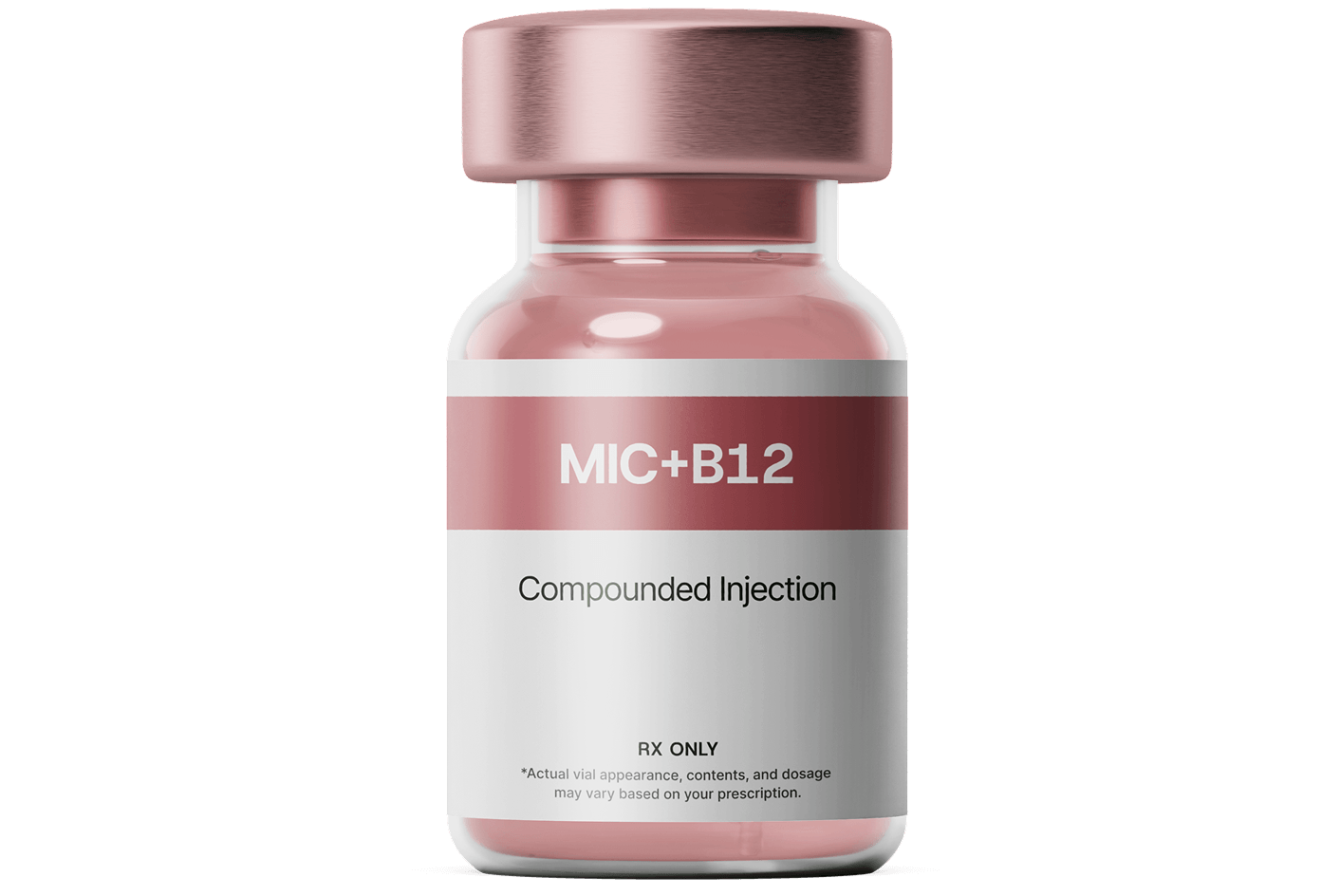
Helimeds lists compounded MIC+B12, containing methionine, inositol, choline, and methylcobalamin. This is a multi-ingredient preparation, not simply another name for a B12-only injection.
Compounded medicines are not FDA-approved. The FDA does not review their safety, effectiveness, and quality before marketing. Evidence that replacing missing B12 treats deficiency does not establish that this combination improves energy, burns fat, or produces weight loss.
Our discussion of MIC+B12 results and evidence examines claims about changes over time.
If you are considering this pathway, begin with a clinical consultation about the actual goal and whether testing or another treatment is more appropriate. Through Helimeds, medical intake is followed by licensed-provider assessment; prescribing is conditional on clinical appropriateness and state availability, and pharmacy fulfillment is a separate step.
Safety and practical questions before an injection
A medically useful vitamin can still cause side effects when injected. B12 injections may cause local discomfort, and allergic reactions are possible. The ingredients in the complete preparation, including preservatives or other added substances, also matter.
Tell the treating clinician about medication or cobalt allergies, previous reactions to injections, relevant medical conditions, pregnancy or breastfeeding, and all medicines and supplements you use.
Helimeds' important safety information explains the site's general treatment disclosures; it does not replace instructions for your exact prescription.
Distinguish a minor reaction from a warning sign
Mild soreness at an injection site is different from a serious allergic reaction. Contact the treating clinician about persistent or worsening symptoms, substantial swelling, a spreading rash, or an injection site that becomes increasingly painful, red, or hot.
Trouble breathing, swelling of the face or throat, or fainting after an injection requires emergency care. Call 911 for an immediate medical emergency in the U.S. Do not direct these symptoms to customer support or wait for a routine online message.
Safety advice should match the exact product. Instructions for a B12-only prescription should not automatically be applied to a compounded blend.
Clarify the plan before using a home injection
Before receiving or using an injection, make sure you can answer these questions:
- What diagnosis or treatment goal is this intended to address?
- Why is an injection being recommended instead of oral B12?
- What are the exact ingredients and prescribed route?
- Who will administer it, and what training is required?
- How will response be assessed, and when should follow-up occur?
- Which side effects require a call, an urgent assessment, or emergency care?
If you are prescribed a vial for home use, resolve unclear directions with the prescriber or dispensing pharmacist before injecting. The amount of medicine, liquid volume, and markings on a syringe are different measurements; the correct measurement depends on the exact concentration and device.
Storage, expiration, and the permitted period after opening also depend on the preparation and its instructions. Do not assume that a purchased supply can safely remain in use for the entire purchase period.
A treatment plan should make clear what is being treated, why an injection was chosen, and how you will know whether it is helping.
The bottom line
People take vitamin B12 shots primarily to replace a deficiency, particularly when absorption problems or other clinical factors make injections useful. Treatment can improve deficiency-related anemia and symptoms and may help prevent lasting nerve injury. Shots do not have an established role as a general energy, weight-loss, or anti-aging treatment for people who already have enough B12.
If you are considering injections, bring your symptom history, diet pattern, medication list, prior laboratory results, and exact proposed product to a licensed clinician. If you are considering Helimeds' compounded MIC+B12 pathway, begin consultation to discuss that specific preparation and your goals; a prescription is possible only after appropriate clinical assessment.
This article provides general health information and does not replace advice from your licensed healthcare professional.
Frequently asked questions
Can I need B12 treatment even if I eat meat?
Yes, eating B12-containing foods does not guarantee that your body absorbs enough. Pernicious anemia, certain digestive conditions, some surgeries, and medication-related effects can interfere with absorption. A clinician can assess whether testing is appropriate based on your symptoms and history.
Do B12 shots work immediately?
An injection delivers B12 without relying on digestive absorption, but that does not mean symptoms improve immediately. Recovery depends on what symptoms are related to the deficiency, how severe it is, and how long it has been present. A lack of an immediate energy boost does not, by itself, mean treatment has failed.
Will I need B12 injections forever?
Some people need ongoing B12 replacement because the underlying absorption problem is permanent. Others may eventually use oral supplementation or maintain adequate intake through an appropriate nutrition plan. The need for lifelong replacement does not automatically mean lifelong injections, and changes should be guided by the treating clinician.
Is a B12 shot the same as a MIC+B12 shot?
No. A B12-only injection supplies vitamin B12, while MIC+B12 combines methionine, inositol, choline, and a form of B12 called methylcobalamin. Helimeds lists MIC+B12 as a compounded preparation, which is not FDA-approved, and benefits established for treating B12 deficiency do not prove benefits for the combination.
History
Current Version
Written by David Letsa
Medically reviewed by Dr. Alexandra Christiansen, MD