Can people with type 1 diabetes take GLP-1 medicines?

Medically reviewed by: Dr. Alexandra Christiansen, MD
Written by: David Letsa
Helimeds’ Fact-Checking Standards. Every piece of content at Helimeds adheres to the highest editorial standards for language, style, and medical accuracy. To learn what we do to deliver the best health insights to you, check out our content review principles.
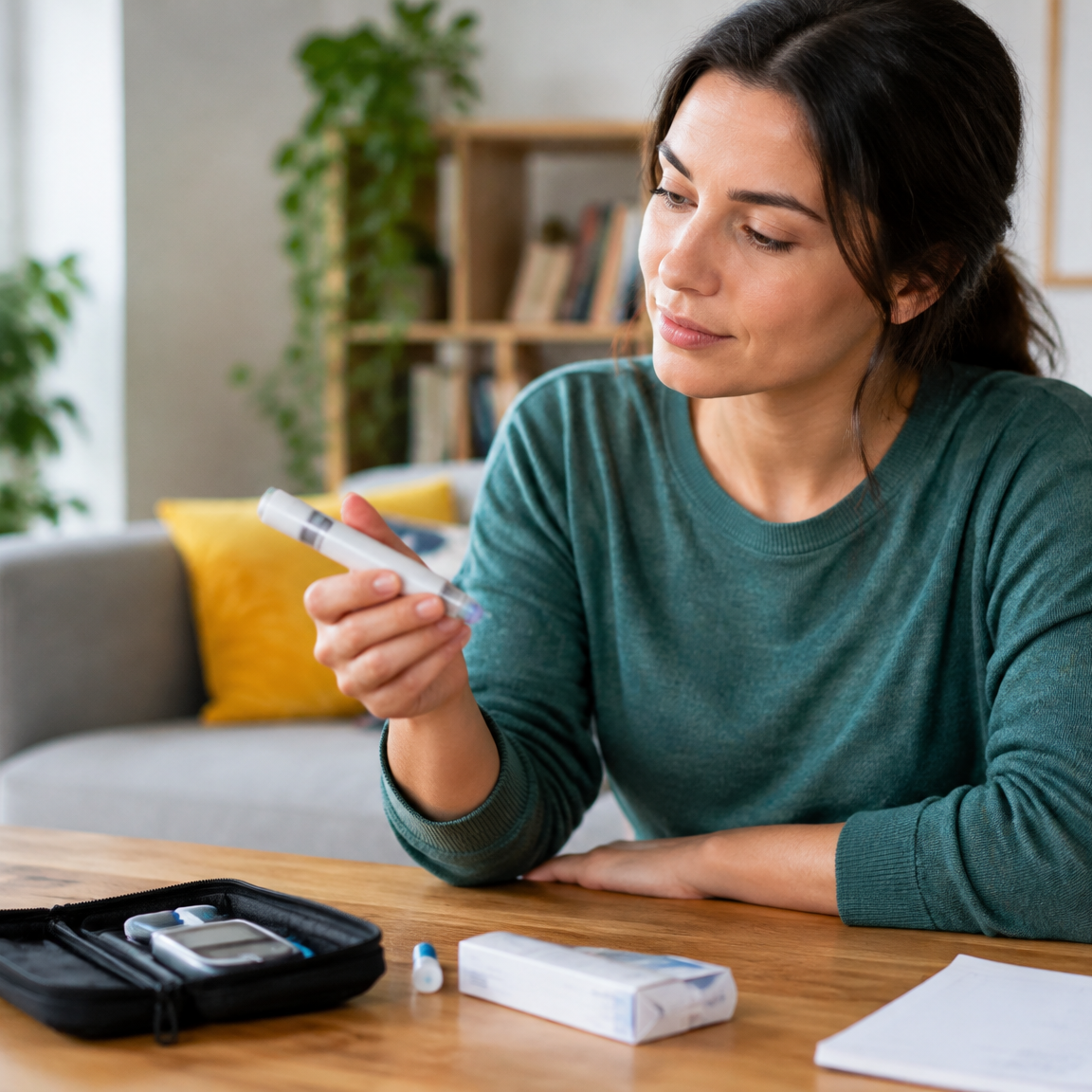
Sometimes, a clinician may prescribe a GLP-1 medicine for an adult with type 1 diabetes, but the reason for treatment matters. GLP-1 medicines are not approved to treat type 1 diabetes itself, and they cannot replace insulin. Using one specifically to improve type 1 diabetes glucose control is off-label. A separate question is whether a particular medicine's approved weight-management indication applies to someone who also has type 1 diabetes.
The decision requires more than checking weight or an A1C result. Appetite changes, slower digestion, and changing insulin needs can complicate diabetes management. Before considering treatment, involve the clinician who manages your insulin, ideally your endocrinologist, so there is a clear plan for glucose monitoring, ketone testing, and follow-up.
What "can take a GLP-1" actually means
Treating type 1 diabetes and treating obesity are different decisions
Type 1 diabetes occurs when the immune system damages the pancreatic cells that make insulin. People with type 1 diabetes need insulin to regulate blood glucose and prevent dangerous metabolic complications. A medicine that affects appetite or digestion does not correct that underlying insulin deficiency.
GLP-1 receptor agonists act like glucagon-like peptide-1, a hormone involved in appetite, digestion, and glucose regulation. They can stimulate insulin release when functioning insulin-producing cells are present. That action does not make them insulin replacements for people with type 1 diabetes.
However, type 1 diabetes does not prevent someone from also developing obesity or insulin resistance, which means the body responds less effectively to insulin. Those concerns deserve assessment in their own right. A clinician may consider whether weight-management treatment is appropriate while separately maintaining a safe insulin treatment plan.
An obesity diagnosis or a body mass index threshold does not automatically establish eligibility. The exact product, indication, medical history, and ability to monitor treatment all affect the decision.
Off-label prescribing is different from an unapproved drug
Off-label prescribing means using an FDA-approved medicine outside its approved labeling, such as for a different condition or population. It can be appropriate in selected circumstances, but the clinician must evaluate the evidence and explain the uncertainty.
A compounded medicine is a different category. Compounded drugs are not FDA-approved, and the FDA does not review their safety, effectiveness, and quality before marketing. A prescription for a compounded preparation does not make it an approved treatment for type 1 diabetes.
These distinctions help make sense of apparently conflicting answers online:
| Question | What it means for someone with type 1 diabetes |
|---|---|
| Is a GLP-1 approved to treat type 1 diabetes? | These medicines are not approved as treatments for type 1 diabetes itself. |
| Could a clinician consider an approved weight-management medicine? | Possibly, after checking the exact indication, individual risks, and diabetes management needs. |
| Does a prescription mean insulin can be stopped? | No. GLP-1 treatment does not replace the insulin needed in type 1 diabetes. |
| Is compounded semaglutide generic Wegovy? | No. It is not an FDA-approved generic or an established interchangeable equivalent. |
Helimeds provides separate treatment information for compounded semaglutide.
The useful question is therefore more specific than "Are GLP-1s allowed?" Ask which medicine is being considered, what condition it would treat, and what evidence supports that use in your circumstances.
Why someone with type 1 diabetes might consider treatment
Weight management can be a legitimate treatment goal
Managing weight with type 1 diabetes can involve competing demands. Physical activity may require changes to insulin and food intake, while treating low glucose requires carbohydrates even when someone is trying to reduce overall intake. Needing help with weight management does not mean someone has managed diabetes poorly.
GLP-1 medicines can reduce appetite and increase feelings of fullness. Those effects explain why certain products have weight-management indications. For example, Wegovy contains semaglutide and has approved weight-management uses in specified populations. Its U.S. prescribing information is the appropriate reference for the exact formulation, indication, and safety requirements.
That approval does not answer every question about someone who also uses insulin for type 1 diabetes. The clinician still needs to evaluate whether the anticipated benefit outweighs the additional treatment burden and risks.
A meaningful goal might include improved weight-related health, mobility, or ability to participate in daily activities. It should not be reduced to reaching the lowest possible weight or insulin dose. Maintaining adequate nutrition and avoiding hypoglycemia remain central.
Glucose control and insulin requirements need a separate assessment
Changes in appetite, food intake, body weight, and digestion can change how much insulin someone needs and when its effects match a meal. That creates a potential reason to study GLP-1 treatment alongside insulin, but also an important safety challenge.
A lower insulin requirement is not automatically a better outcome. Insulin is essential treatment, and taking the amount your body needs is not a failure. The relevant question is whether an overall treatment plan improves health without creating more lows, ketones, nutritional problems, or daily complexity.
Likewise, a lower A1C does not tell the whole story. A1C reflects average glucose over time, so it can conceal frequent low readings or wide swings. Continuous glucose monitoring can help show whether a change improves time in an individualized target range while avoiding hypoglycemia.
Do not apply weight-loss percentages from general obesity advertising to type 1 diabetes. Evidence from a different population, formulation, or treatment protocol cannot reliably predict your result. Benefits reported for an FDA-approved product also do not establish the performance of a pharmacy's compounded preparation.
Why insulin coordination is the central safety issue
Low glucose can occur when insulin and food no longer match
A GLP-1 medicine may make a person feel full sooner or eat less than expected. Slower stomach emptying can also change when carbohydrate from a meal reaches the bloodstream. Previously effective mealtime insulin instructions may no longer match those patterns.
This can create an early low glucose reading followed by a later rise. It does not mean everyone should delay meal insulin, change a pump setting, or reduce insulin by a standard percentage. Those decisions depend on the insulin used, glucose patterns, meals, symptoms, and treatment device.
Our guide to taking a GLP-1 medicine with insulin discusses coordinated monitoring and clinician-directed adjustments.
Before treatment, the diabetes team should explain:
- Who will review glucose data and make insulin changes.
- How to respond if a meal is smaller than expected or cannot be finished.
- When repeated lows require prompt contact.
- How to use the existing low-glucose treatment and rescue plan.
- Whether additional monitoring is needed after a medication change.
A continuous glucose monitor can make trends more visible, but it does not eliminate hypoglycemia. An automated insulin delivery system also cannot anticipate every effect of reduced intake or slower digestion. Technology supports the plan; it does not replace clinical oversight.
Too little insulin can cause ketones and ketoacidosis
Diabetic ketoacidosis, or DKA, develops when there is not enough insulin and the body produces excessive ketones, making the blood too acidic. It is a medical emergency.
Reduced appetite can create a dangerous misunderstanding: "If I am barely eating, I do not need insulin." People with type 1 diabetes still need background insulin even when they are not eating normally. The amount and delivery plan require individualized instructions, especially during illness or vomiting.
Eating less does not remove the need for insulin in type 1 diabetes. Never use an online insulin-reduction rule to make room for a GLP-1 medicine.
Vomiting does not remove insulin that has already been injected or delivered under the skin. The concern is that vomiting, dehydration, reduced intake, and disrupted insulin delivery can make diabetes management less predictable.
A glucose reading alone cannot rule out a ketone-related problem. Your clinician should specify when to check ketones, what results require action, and where to seek help. Do not wait for an unusually high glucose reading if you have concerning symptoms.
DKA warning signs can include vomiting, abdominal pain, deep or rapid breathing, fruity-smelling breath, marked weakness, or confusion. Seek emergency care for suspected DKA. Call 911 for severe breathing difficulty, loss of consciousness, confusion, or another immediate medical emergency.
Side effects that need closer attention with type 1 diabetes
Nausea and vomiting should not automatically be called adjustment
Nausea, vomiting, diarrhea, constipation, and abdominal discomfort can occur with GLP-1 treatment. With type 1 diabetes, the practical issue is also whether you can drink, eat, treat a low, and follow your insulin plan.
Mild nausea and persistent vomiting require different responses. Contact the treating clinician promptly if symptoms interfere with food or fluid intake, cause repeated glucose problems, or prevent you from following your diabetes instructions. Repeated vomiting, inability to keep fluids down, or symptoms concerning for DKA require urgent assessment.
Gastroparesis, a condition in which the stomach empties too slowly, is especially relevant. Symptoms may include prolonged fullness, nausea, vomiting, and unpredictable glucose after meals. Report an existing diagnosis or those symptoms before considering a medicine that can further slow stomach emptying.
Do not assume that nausea proves treatment is working. Record when symptoms started, how they relate to meals and medication changes, and whether glucose or ketones changed. Those details help the clinician distinguish a medication effect from another medical problem.
Other warnings can change whether treatment is suitable
For semaglutide products such as Wegovy, important safety considerations extend beyond glucose.
Wegovy carries a boxed warning about thyroid C-cell tumors. These tumors occurred in rodent studies; it is unknown whether Wegovy causes them in humans. It is contraindicated in people with a personal or family history of medullary thyroid carcinoma or multiple endocrine neoplasia syndrome type 2, called MEN 2. This does not mean every thyroid condition is a contraindication.
A clinician should also review a history of pancreatitis, gallbladder disease, kidney problems, significant gastrointestinal symptoms, diabetic eye disease, and serious medication allergies. Severe, persistent abdominal pain, particularly with vomiting, warrants urgent medical assessment rather than an assumption that it is ordinary nausea. Fluid loss from vomiting or diarrhea can cause dehydration and worsen kidney function.
Seek emergency help for signs of a severe allergic reaction, such as difficulty breathing or swelling of the face, tongue, or throat. Severe hypoglycemia with unconsciousness, seizure, or inability to swallow also requires emergency help and use of the prescribed rescue plan.
Pregnancy planning, breastfeeding, and upcoming procedures need product-specific discussion. Tell the prescribing and anesthesia teams about GLP-1 treatment before surgery or sedation because delayed stomach emptying can matter. Do not create your own medication-withholding or insulin plan for a procedure.
Helimeds' safety-information resources provide additional label navigation, not a replacement for the exact product's prescribing information.
How to compare a specific medicine or treatment pathway
The ingredient, brand, and formulation all matter
"GLP-1" describes a treatment category, not a single interchangeable prescription. Semaglutide is the active ingredient in Wegovy and Ozempic, but those brand names do not have identical indication lists or instructions.
Wegovy labeling includes injectable and oral formulations. That does not mean every formulation has identical instructions or that a particular telehealth service offers every approved presentation. Confirm the exact product and route rather than assuming all GLP-1 treatment is a weekly injection.
For someone with type 1 diabetes, a useful comparison should address:
- The condition being treated and whether that use is approved or off-label.
- The exact brand, formulation, and route.
- Evidence relevant to people with type 1 diabetes.
- Gastrointestinal tolerability and nutritional needs.
- Coordination with the existing insulin regimen or pump.
- Follow-up arrangements and access to urgent clinical advice.
Avoid choosing solely by a headline weight-loss figure. A medicine that requires monitoring or follow-up you cannot reliably obtain may not be a practical option, even if its results in another population sound appealing.
Our guide to comparing GLP-1 weight-management options addresses product-specific differences.
Compounded treatment adds questions about the preparation
Compounded semaglutide should not be described as generic Wegovy, an approved equivalent, or clinically interchangeable with an FDA-approved product. The FDA's information on unapproved GLP-1 products explains the distinction and concerns involving these preparations.
If a clinician proposes a compounded medicine, ask why that preparation is being considered for your medical needs and what exactly the pharmacy will dispense. Do not assume that an added vitamin improves weight loss or prevents nausea.
Measurement instructions also require particular care. Milligrams describe an amount of drug, milliliters describe fluid volume, and syringe units describe markings on a particular syringe. They are not interchangeable quantities. A measurement depends on the exact concentration and device.
The FDA has reported dosing errors involving compounded injectable semaglutide. Resolve unclear instructions with the prescriber or dispensing pharmacist before injecting. Never borrow a conversion from another person's vial or assume that insulin syringe markings represent a comparable medication dose.
What to prepare before an endocrinology appointment
Bring enough information to evaluate both the treatment goal and the safety plan. A medication name without recent glucose patterns or an insulin history leaves important questions unanswered.
Useful information includes your current insulin regimen, pump or automated delivery system, recent glucose reports, episodes of severe hypoglycemia, previous DKA, and any difficulty recognizing lows. Also bring a full medication list, weight history if weight management is the goal, gastrointestinal symptoms, and any proposed prescription or pharmacy instructions.
Ask for a coordinated plan covering these questions:
- What specific health outcome are we trying to improve?
- Is this use approved or off-label for the exact product?
- Who is responsible for insulin adjustments?
- When should I check ketones, and whom should I contact about the result?
- What should I do if I cannot eat, drink, or treat a low normally?
- What follow-up will determine whether treatment is beneficial and tolerable?
- What is the plan if the medication becomes unavailable or treatment ends?
Our discussion of short-term GLP-1 treatment also covers follow-up and discontinuation planning.
If medication is not appropriate, the conversation can still be useful. Reviewing insulin delivery, meal-related patterns, activity-related lows, nutrition, and diabetes technology may identify other ways to address the original concern.
Online assessment does not replace ongoing diabetes care
An online weight-management service may assess whether it can offer an appropriate treatment pathway, but it should not be assumed to provide comprehensive type 1 diabetes management.
Helimeds describes a process beginning with an online health-history submission and review by an affiliated licensed clinician. Treatment is prescribed only if clinically appropriate and permitted in your state, with dispensing and fulfillment through a pharmacy. Completing intake is not automatic approval and does not establish that someone with type 1 diabetes can be treated through the platform.
Before beginning any separate weight-management consultation, ask whether the service can assess your circumstances and coordinate with your diabetes clinician. A call, examination, laboratory testing, or specialist referral may be needed. Customer support can address service questions, but insulin changes belong with the treating clinical team.
The bottom line
Some adults with type 1 diabetes may be considered for GLP-1 treatment, particularly when there is a separate weight-management concern. That possibility does not make a GLP-1 an approved treatment for type 1 diabetes or a substitute for insulin.
The most useful next step is to bring the exact medication you are considering and recent glucose information to your endocrinologist. Clarify the treatment goal, approval status, insulin coordination, ketone plan, and follow-up before starting. If you also pursue an online consultation, keep your type 1 diabetes history explicit and preserve ongoing diabetes care.
This article provides general health information and does not replace advice from your licensed healthcare professional.
Frequently asked questions
Does type 1 diabetes automatically rule out Wegovy?
Type 1 diabetes does not by itself answer whether Wegovy is appropriate for a separate weight-management indication. A clinician must assess the exact formulation, approved population, medical history, and insulin-related risks. Wegovy should not be treated as an approved medicine for type 1 diabetes glucose control.
Can I reduce insulin if a GLP-1 makes me less hungry?
Do not reduce insulin on your own because your appetite changes. Your diabetes clinician may need to adjust treatment using glucose patterns, food intake, and your insulin delivery method. Background insulin remains essential even when you are eating less.
Is nausea after starting a GLP-1 always a medication side effect?
No. Nausea can be a medication effect, but it can also occur with DKA or another illness. With type 1 diabetes, follow your clinician's glucose and ketone instructions, and seek urgent assessment for repeated vomiting, inability to keep fluids down, or symptoms concerning for DKA.
Does using a continuous glucose monitor make GLP-1 treatment safe?
A continuous glucose monitor can help identify trends and low readings, but it does not measure ketones or prevent every complication. Treatment still requires an individualized insulin plan, symptom guidance, and clinical follow-up. An automated insulin delivery system does not remove those requirements.
History
Current Version
Written by David Letsa
Medically reviewed by Dr. Alexandra Christiansen, MD