When to take vitamin B12

Medically reviewed by: Dr. Alexandra Christiansen, MD
Written by: Granit Rudi
Helimeds’ Fact-Checking Standards. Every piece of content at Helimeds adheres to the highest editorial standards for language, style, and medical accuracy. To learn what we do to deliver the best health insights to you, check out our content review principles.

For most over-the-counter vitamin B12 supplements, you can choose a time of day that fits your routine. Morning is convenient for some people, but it is not required. You can usually take B12 with or without food, unless your product label or healthcare professional gives different instructions. (healthy.kaiserpermanente.org)
If you take B12 to treat a diagnosed deficiency, follow the schedule your clinician recommends. The right form and duration depend on why your B12 is low, not simply on the time of day.
Is morning or night better?
There is no established reason that everyone needs to take B12 in the morning. Breakfast may be an easy reminder, but an evening routine can work too. Choose a time you can remember and follow the directions on your particular product.
B12 helps the body make healthy red blood cells and supports nerve function. That does not mean a B12 supplement acts like a stimulant or will give everyone an immediate energy boost. If you feel tired often, a healthcare professional can help identify the cause rather than assuming you need B12. (ods.od.nih.gov)
Should you take B12 with food?
Most standard B12 supplements can be taken with or without a meal. Taking yours with food may be easier to remember, while taking it without food may suit your routine better.
The B12 in supplements is not bound to food protein in the way B12 in foods is. Harvard Health explains that stomach acid helps release B12 from food, a step that is not needed to release it from a supplement. (harvardhealth.org)
Check the instructions if your product combines B12 with other ingredients. If you have a prescription, follow its specific directions rather than applying general supplement advice.
Does the form of B12 change when you take it?
B12 comes in several forms, including tablets, liquids and products placed under the tongue. Read the label for how to use yours. A pharmacist can help if you are unsure whether to swallow, chew or dissolve a product.
B12 is also available by injection. An injection schedule is different from an everyday supplement routine and should follow the prescribing clinician’s instructions. Some people with a deficiency may need injections, while others may be advised to take B12 by mouth. (ods.od.nih.gov)
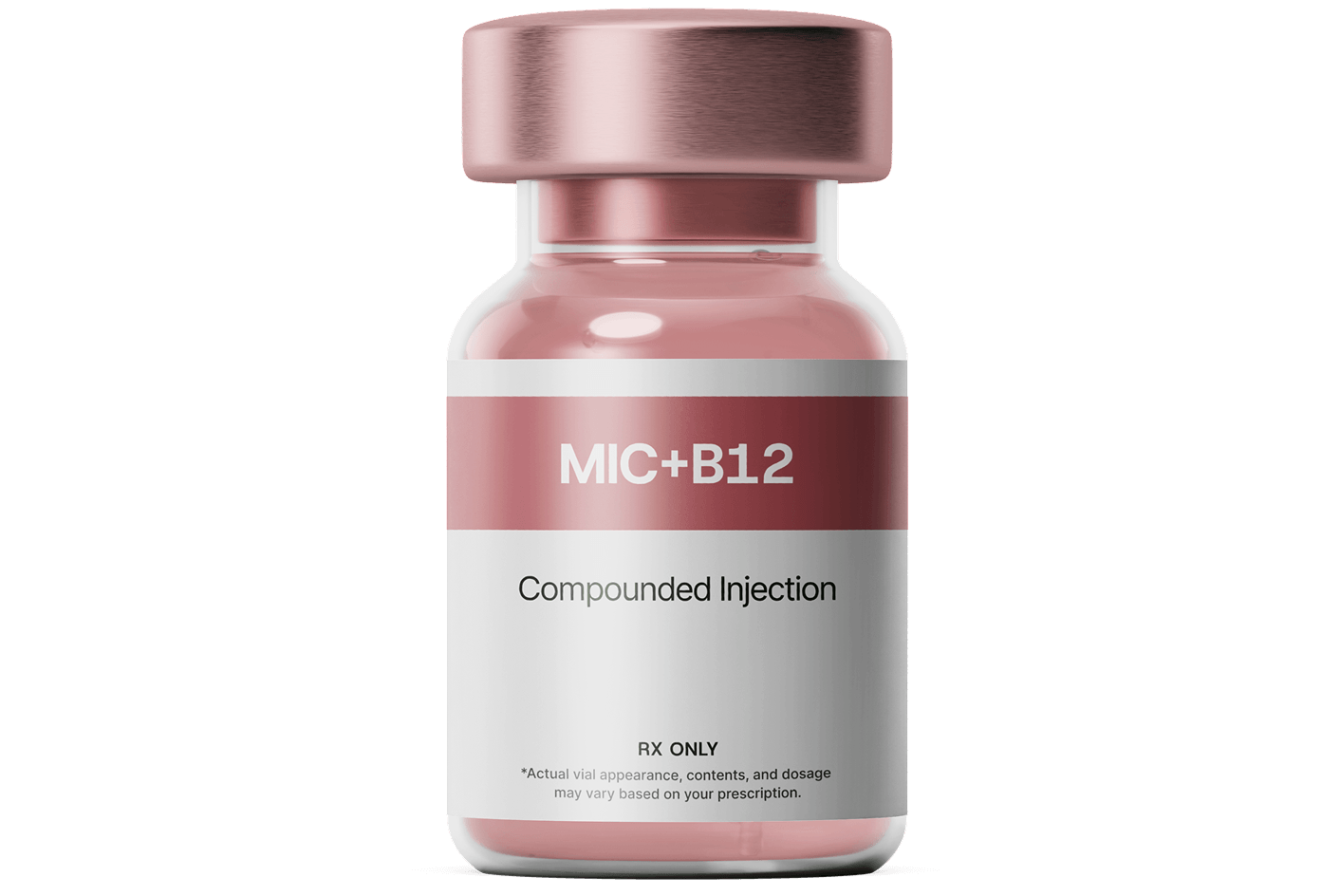
Helimeds also offers a MIC+B12 treatment pathway. It is different from taking a stand-alone oral B12 supplement and should not be assumed to replace treatment for a diagnosed deficiency. If you are considering it, complete a medical intake and consult with a licensed provider. Treatment may be prescribed if clinically appropriate and permitted in your state, with fulfillment through a licensed pharmacy partner. (helimeds.com)
When should you consider taking B12?
A supplement may be worth discussing with a healthcare professional if your diet provides little B12 or if you have a condition that makes it harder to absorb. B12 occurs naturally in foods such as meat, fish, eggs and dairy. Some cereals and plant-based milks are fortified with it, so check their labels.
People who do not eat animal products, people who have had weight-loss surgery and people with certain digestive or stomach conditions may have a greater risk of deficiency. Some medicines that reduce stomach acid can also affect B12 absorption. The Harvard Health overview of B12 describes these risk factors and the role of blood tests in checking levels. (harvardhealth.org)
Tell your clinician or pharmacist about the medicines and supplements you take. Do not change a prescribed medication or assume that spacing it apart from B12 will resolve an absorption concern.
What if you think you have a deficiency?
Fatigue, weakness, numbness or tingling, and balance problems can occur with B12 deficiency, but they can have other causes too. Contact a healthcare professional if you have these symptoms, particularly if they are new or worsening. They can decide whether testing is appropriate and discuss treatment if needed. (ods.od.nih.gov)
If you have already been told you have low B12, ask how long to take it and whether you need follow-up testing. Do not replace a prescribed plan with a different supplement or injection without checking first.
For an ordinary supplement, the practical next step is to check the label and choose a convenient time. If you are considering Helimeds’ MIC+B12 pathway, start an intake and discuss whether it is appropriate with a licensed provider.
History
Current Version
Written by Granit Rudi
Medically reviewed by Dr. Alexandra Christiansen, MD