How much vitamin B12 should a woman over 50 take?

Medically reviewed by: Dr. Alexandra Christiansen, MD
Written by: Dr. Tomas Salinas Aguilera, MD
Helimeds’ Fact-Checking Standards. Every piece of content at Helimeds adheres to the highest editorial standards for language, style, and medical accuracy. To learn what we do to deliver the best health insights to you, check out our content review principles.

Most women over 50 need 2.4 micrograms (mcg) of vitamin B12 per day. That is the recommended dietary allowance for adults, and it refers to total intake from food, fortified foods and supplements. It does not mean everyone needs a separate 2.4 mcg supplement.
The amount does not increase simply because you turn 50. What can change is how well you absorb B12 from food. Your diet, medications and medical history can also affect whether you need a supplement or testing. A confirmed deficiency may require a different treatment plan from routine nutritional intake. Yale Medicine explains that supplement amounts vary widely and should be discussed with a healthcare professional.
Why B12 deserves attention after 50
Vitamin B12 helps the body make DNA and healthy red blood cells. It also helps maintain nerve function and plays a role in converting food into energy.
Some older adults produce less stomach acid, making it harder to release B12 that is naturally attached to proteins in food. B12 in supplements is not bound to food protein, so it does not need to be released in the same way. Fortified foods are another source of added B12. See Harvard Health’s explanation of B12 absorption.
This does not mean every woman over 50 has an absorption problem or needs a high-dose supplement. It does mean that a reliable source of B12 and a conversation about individual risk can be worthwhile.
Can you get enough B12 from food?
Many people can meet their daily needs through food. Natural sources include:
- Fish and shellfish
- Meat and poultry
- Milk, yogurt and cheese
- Eggs
Some breakfast cereals, plant milks and nutritional yeast products have B12 added. Check the label because not every product is fortified, and amounts vary by serving.
If you follow a vegan diet or eat very few animal foods, plan for a reliable source of B12 from fortified foods, a supplement or both. A healthcare professional or registered dietitian can help you decide whether your usual intake is adequate.
Do you need a B12 supplement?
A supplement may be useful if your diet does not provide enough B12 or if your healthcare professional thinks you may have trouble absorbing it. But 2.4 mcg is a daily intake target, not a prescription for treating a deficiency.
B12 is available in multivitamins, B-complex products and stand-alone supplements. Labels may list amounts much higher than the daily recommendation. Yale Medicine notes that some pills contain 500 to 1,000 mcg or more, although the body absorbs only a small percentage of a large oral amount. That does not make those amounts the right choice for everyone.
When comparing supplements, check the B12 amount and serving size on the label. If you already take a multivitamin, include it when discussing your intake with your clinician. Ask what amount and form fit your situation, especially if you have a medical condition or take regular medications.
If you are pregnant or breastfeeding, the recommended intake is higher than the usual adult amount: 2.6 mcg during pregnancy and 2.8 mcg while breastfeeding. Your prenatal or other supplements may already contain B12. Healthline’s summary of B12 intake recommendations describes these differences.
When should you ask about testing?
Talk with a healthcare professional if you have persistent fatigue or weakness, numbness or tingling, balance problems, or memory changes. These symptoms can have several causes and do not establish a B12 deficiency on their own. Mention them rather than assuming a supplement will solve the problem.
It is also worth asking about your B12 status if you:
- Eat a vegan diet or very few animal foods
- Take metformin or long-term acid-reducing medication
- Have had gastric bypass or another procedure affecting the stomach
- Have a condition that can affect absorption, such as celiac disease, Crohn’s disease or pernicious anemia
A clinician may consider a blood test based on your symptoms and risk factors. If the result suggests a deficiency, further assessment may help identify the cause. Tell your clinician about any supplements you already take. Yale Medicine’s B12 guide describes risk factors, symptoms and testing.
Are B12 injections necessary?
Not always. Treatment for a confirmed deficiency may involve oral B12 or an injection, depending on the cause and the person’s circumstances. A clinician should determine the treatment and follow-up rather than relying on the general 2.4 mcg intake recommendation.
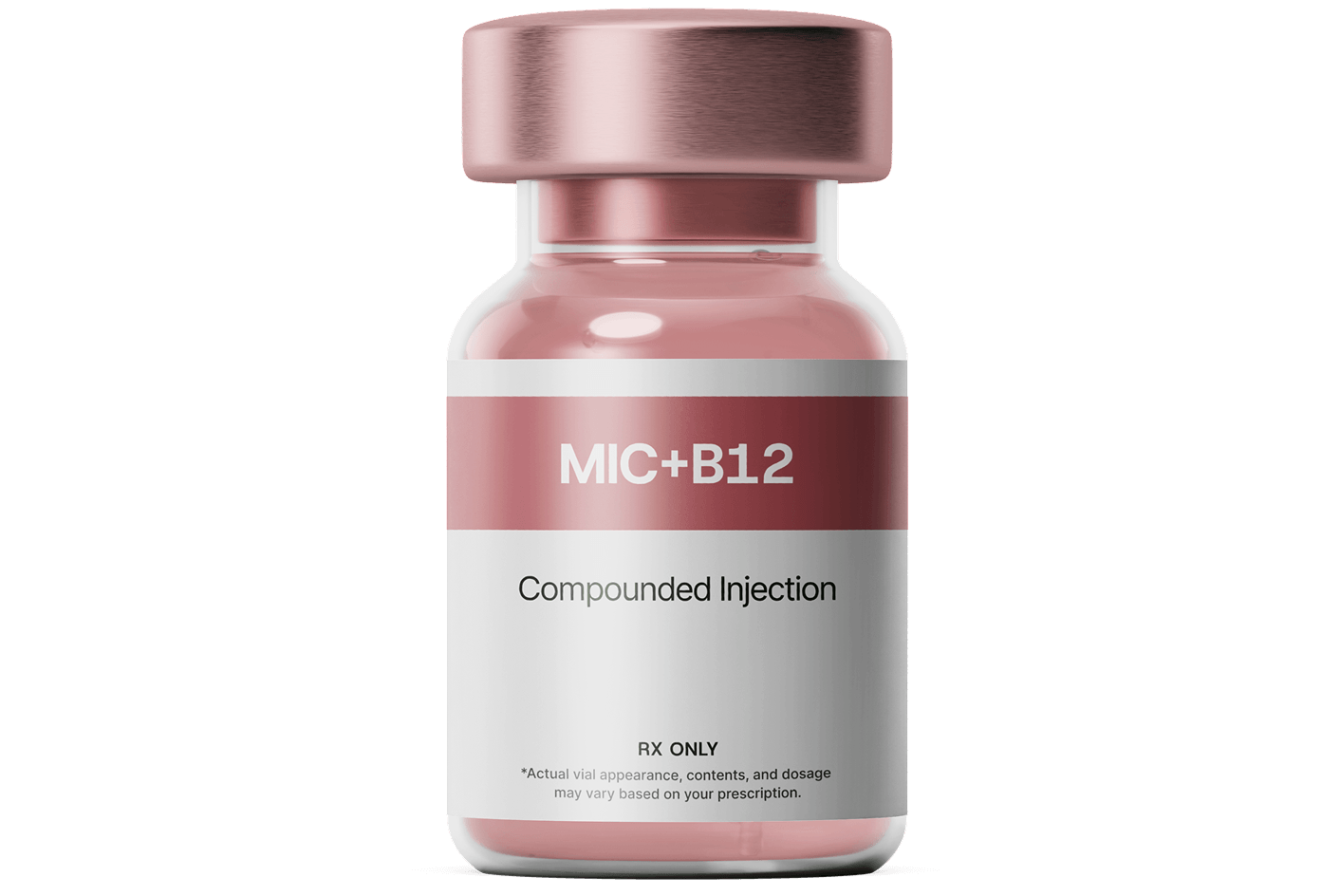
An injection marketed for wellness should not be assumed to diagnose or treat a B12 deficiency. If you are considering Helimeds’ MIC+B12 pathway, discuss your symptoms and any test results with a licensed provider. Complete a medical intake and consult with a licensed provider. If clinically appropriate, treatment may be prescribed and fulfilled through a licensed pharmacy partner, subject to state availability and medical review.
For everyday planning, start with the 2.4 mcg daily intake target and consider where your B12 comes from. If you have symptoms, absorption concerns or questions about the MIC+B12 pathway, a consultation can help you choose an appropriate next step.
History
Current Version
Written by Dr. Tomas Salinas Aguilera, MD
Medically reviewed by Dr. Alexandra Christiansen, MD