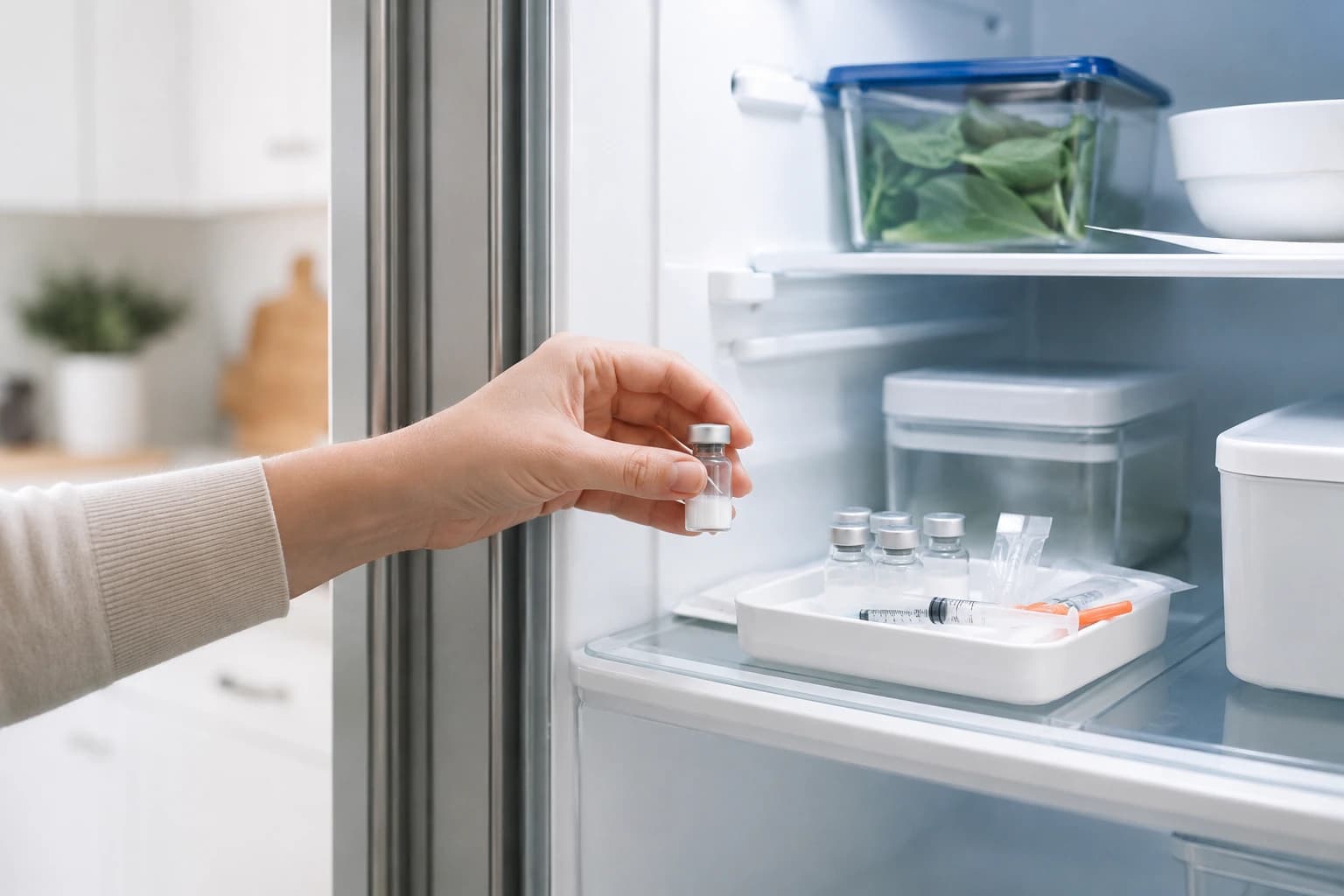
Understanding the right sermorelin dosage is key to stimulating your pituitary gland and achieving desired growth hormone levels. Whether you’re exploring a sermorelin injection dosage or reviewing a sermorelin dosing protocol, precise titration ensures benefits like improved sleep and body composition while minimizing side effects.

Medically reviewed by:Dr. Alexandra Christiansen, MD
Fact checked
Heli's Fact-Checking Standards
Every piece of content at Heli's adheres to the highest editorial standards for language, style, and medical accuracy. To learn what we do to deliver the best health and lifestyle insights to you, Check out our content review principles.
Understanding Sermorelin Dosage
What Is Sermorelin and Why Dosage Matters
Sermorelin is a synthetic growth hormone–releasing hormone (GHRH) analogue that prompts your pituitary to release endogenous growth hormone (GH) FDA prescribing information for Geref. Unlike direct HGH injections, it supports a more physiologic pattern of GH release. Proper sermorelin dosage balances efficacy and safety: insufficient dosing may offer no benefit, whereas excessive dosing can cause joint discomfort, fluid retention, or headaches.
How Sermorelin Dosage Affects Growth Hormone Levels
When administered via subcutaneous injection, sermorelin binds to GHRH receptors in the pituitary, inducing GH pulses that elevate IGF-1 production in the liver. Clinical studies report a 15–25% rise in IGF-1 after 3–6 months of nightly dosing PubMed study on sermorelin and IGF-1. Adjusting your sermorelin dosing protocol based on IGF-1 feedback helps maintain levels within a target range without overshooting typical physiologic profiles.
Sermorelin Dosing Protocol Explained
Standard Initiation Protocol for New Patients
Most adults begin with 0.2 mg (200 mcg) of sermorelin injected subcutaneously once nightly, just before sleep. This timing aligns with the natural GH pulse during slow-wave sleep. For overweight or insulin-resistant patients, a lower starting dose (0.1–0.15 mg) may reduce transient water retention. Always confirm your starting sermorelin dosage with baseline labs (IGF-1, thyroid function, cortisol).
Titration Steps: When and How to Adjust Your Dose
• After 4–6 weeks, repeat IGF-1 levels.
– If IGF-1 remains below the mid-normal range, increase by 0.05–0.1 mg nightly.
– If IGF-1 exceeds target or side effects arise (headache, mild edema), hold or reduce by 0.05 mg.
Aim for an IGF-1 SDS (standard deviation score) between +0.5 and +1.5. Retest and adjust every 6–8 weeks to personalize therapy.
Factors Influencing Your Sermorelin Dosing Protocol
Individual metabolism, age, body composition, sleep quality, and stress affect GH response. Smokers or corticosteroid users may require higher doses to overcome suppression of GH release. Conversely, highly active individuals with intense exercise routines may need smaller doses, as workouts naturally boost GH pulses. Consider co-medications—like thyroid hormone or sex steroids—that modulate your endocrine balance.
Sermorelin Injection Dosage and Units
Measuring Sermorelin Dosage in Units
Sermorelin typically comes as a lyophilized powder in vials (e.g., 5 mg per vial, equivalent to 5,000 mcg). If your target dose is 0.2 mg (200 mcg) nightly, one 5 mg vial yields 25 doses. Insulin syringes are marked in “units”; when reconstituted at 100 mcg/mL, 1 unit on a U-100 syringe equals 1 mcg.
Preparing Your Vial and Reconstitution Tips
Wash hands and disinfect the vial top with alcohol swabs.
Draw 1 mL of bacteriostatic water into a sterile syringe.
Inject water gently along the vial wall to avoid frothing.
Swirl—do not shake—until the powder fully dissolves.
Label with the date and store at 2–8 °C for up to 28 days.
Best Practices for Subcutaneous Injection
Choose a clean site—abdomen, outer thigh, or upper arm—and rotate daily to prevent irritation. Pinch a 2 cm skin fold and insert the needle at a 45–90° angle. Inject slowly, wait 5 seconds, then withdraw. Apply gentle pressure; do not rub. Dispose of sharps properly following the CDC Injection Safety Guidelines.
Sermorelin Dosage Chart: Standard Guidelines
Age-Based and Weight-Based Chart Recommendations
Below is a simplified guideline. Always confirm with labs and a qualified provider.
• Ages 30–45: 0.15–0.25 mg nightly
• Ages 46–60: 0.2–0.3 mg nightly
• Ages 61 and older: 0.1–0.2 mg nightly
Weight modifiers:
• Under 150 lb: reduce dose by 0.05 mg
• Over 200 lb: increase dose by 0.05 mg
Tailoring the Sermorelin Dosage Chart to Your Goals
For anti-aging benefits (skin elasticity, sleep quality), aim for lower IGF-1 targets. For body-composition goals (lean mass gain, fat loss), a mid-range dose may be more effective. Athletes should consult an endocrinologist to avoid supraphysiologic GH levels that could suppress the HPT axis.
Using a Sermorelin Dosage Calculator to Personalize Your Plan
How to Enter Your Data for Accurate Results
A sermorelin dosage calculator asks for age, weight, baseline IGF-1, sleep quality, and lifestyle factors (stress, exercise frequency). Input your latest lab values (ng/mL), height, and body-fat percentage if available.
Interpreting the Calculator’s Output
The tool provides a recommended nightly dose (mg or mcg) and an expected IGF-1 response curve. For example, “Start at 0.22 mg for 6 weeks; expect a 20% IGF-1 increase.” Use this as an initial guide, not a fixed prescription—verify with your clinician.
When to Re-Run the Sermorelin Dosage Calculator
Recalculate after new labs (IGF-1), significant weight changes (>10 lb), or lifestyle shifts (exercise, stress). If you add other hormones (thyroid, testosterone), re-assessment helps maintain GH axis balance.
Adjusting Sermorelin Dosage: Monitoring and Side Effects
Recognizing Signs of Underdosing or Overdosing
Underdosing signs
• Persistent low energy and poor sleep quality
• Minimal change in body composition
• IGF-1 remains below age-adjusted normal
Overdosing signs
• Joint or muscle aches
• Fluid retention and mild swelling
• Numbness or tingling in hands (carpal tunnel symptoms)
Common Side Effects and How to Mitigate Them
Injection-site redness or itching: apply a cold compress.
Headache or flushing: take acetaminophen and stay well hydrated.
Edema: reduce dose by 0.05 mg and elevate legs; consult your provider if persistent.
Lab Tests and Professional Follow-Up
Every 3 months, check:
• IGF-1 and IGFBP-3 (GH bioactivity)
• Fasting glucose and HbA1c (insulin sensitivity)
• Thyroid panel (TSH, free T3, free T4)
• Cortisol (if fatigue symptoms persist)
Work with an endocrinologist to interpret labs and fine-tune your sermorelin dosage.
Who Should Consider Sermorelin Therapy?
Ideal Candidate Profiles
• Adults with confirmed GH deficiency by stimulation testing
• Patients experiencing age-related GH decline
• Individuals with mild to moderate metabolic syndrome
Contraindications and Precautions
• Active cancer or history of pituitary tumors
• Untreated thyroid disorders
• Pregnancy or breastfeeding
• Severe kidney or liver impairment
Disclose all medical history and medications before starting sermorelin therapy.
Next Steps: Implementing Your Sermorelin Dosage Plan
Working With a Qualified Provider
Choose a board-certified endocrinologist or clinic with experience in GH therapies. Ensure they perform baseline testing (GH stimulation, IGF-1), demonstrate reconstitution techniques, and supervise dose titration. Avoid programs that offer prescriptions without in-person evaluation.
Tracking Progress and Adjusting Over Time
Maintain a therapy journal to log:
• Daily dose and injection time
• Sleep onset and quality (1–10 scale)
• Energy and mood ratings
• Bi-weekly body weight and waist measurements
Review trends with your provider after quarterly labs. Adjust sermorelin dosage in 0.05 mg increments to stay within target IGF-1 ranges and meet your health goals.
Frequently Asked Questions
What Is the Typical Sermorelin Dosage?
Most adults start at 0.2 mg (200 mcg) of sermorelin injected subcutaneously once nightly. Individual factors like age, weight, and baseline IGF-1 guide dose adjustments.
How Is Sermorelin Dosage Calculator Data Used?
What Are Common Side Effects of Sermorelin?
How Often Should I Have Lab Tests?
Can I Adjust My Own Sermorelin Dosing Protocol?
Disclaimer
Disclaimer: This website connects patients with licensed healthcare providers who can evaluate medical conditions and prescribe medications when appropriate. Some medications available through this service may be compounded drugs, which are customized formulations prepared by a pharmacy. The FDA does not conduct premarket review for compounded drugs to evaluate their safety, effectiveness, or quality. (See here: https://www.fda.gov/consumers/consumer-updates/it-really-fda-approved). Individual results may vary, and these medications should only be used under the guidance of a qualified healthcare professional. The information in this article is for educational purposes only and should not be considered medical advice. Always consult your healthcare provider before starting any new treatment.
How we reviewed this article:
Sources
History
Helimeds has strict sourcing guidelines and relies on peer-reviewed studies, academic research institutions, and medical associations. We avoid using tertiary references. You can learn more about how we ensure our content is accurate and current by reading our editorial policy.
U.S. Food and Drug Administration. Geref (sermorelin) prescribing information. 2000. https://www.accessdata.fda.gov/drugsatfda_docs/label/2000/20510lbl.pdf
PubMed. Effects of sermorelin on IGF-1 and GH secretion. PubMed ID 7927334. 1994. https://pubmed.ncbi.nlm.nih.gov/7927334/
Centers for Disease Control and Prevention. Injection safety. 2023. https://www.cdc.gov/injectionsafety/index.html