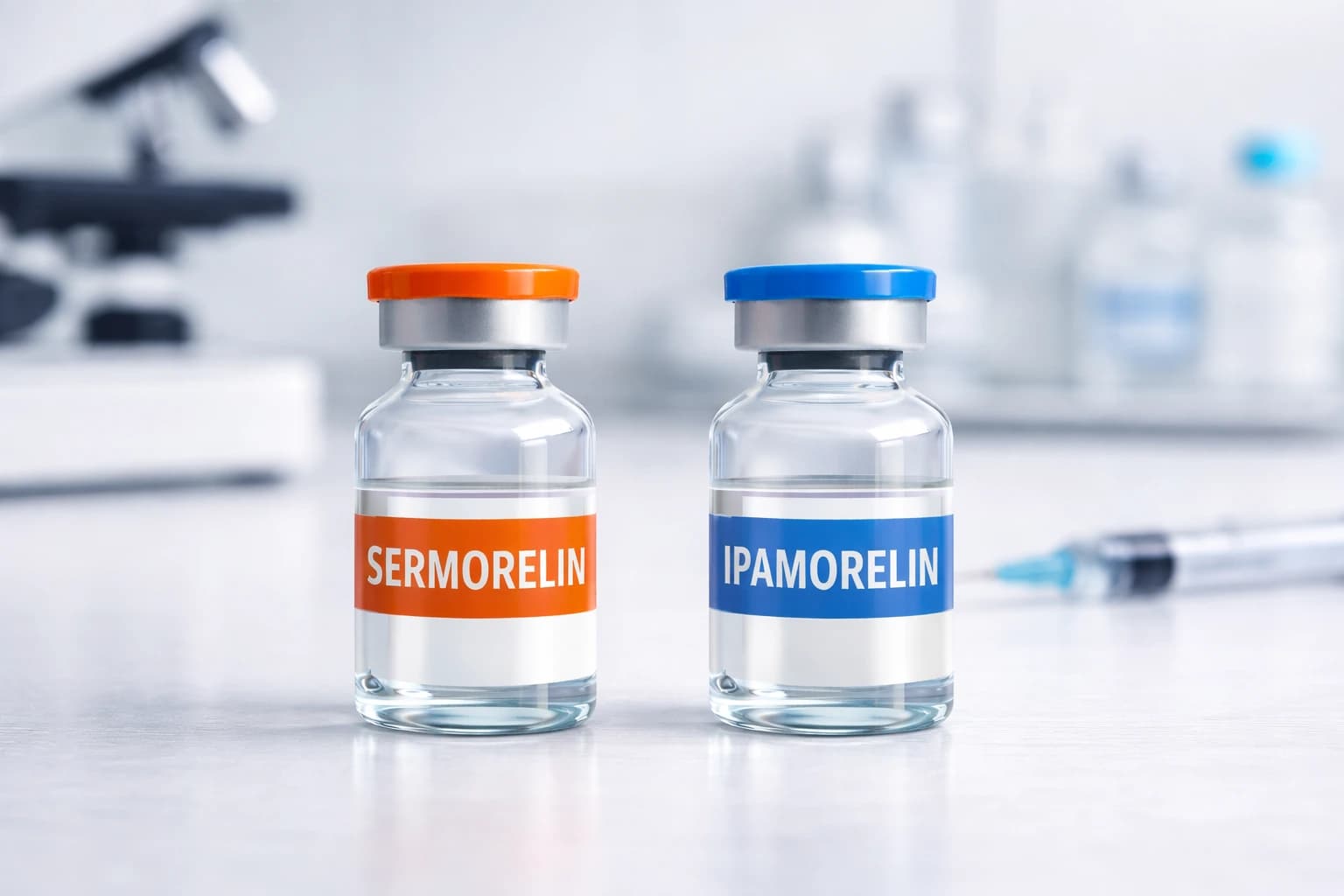
Many clinics advertise sermorelin benefits for females, including better energy, sleep, skin, and body composition. It’s worth knowing, though, that most research on growth-hormone pathways is not “women-only,” and sermorelin itself is often used off-label in adults. Below is a practical, evidence-based look at sermorelin for women—what it is, what it may help with, what’s uncertain, and how safety is usually handled.

Medically reviewed by:Dr. Alexandra Christiansen, MD
Fact checked
Heli's Fact-Checking Standards
Every piece of content at Heli's adheres to the highest editorial standards for language, style, and medical accuracy. To learn what we do to deliver the best health and lifestyle insights to you, Check out our content review principles.
What Is Sermorelin?
Sermorelin is a synthetic peptide made from the first 29 amino acids of the body’s natural growth hormone–releasing hormone (GHRH). In older regulatory documents, sermorelin acetate was used in a diagnostic setting to test pituitary growth hormone (GH) response (e.g., the product “Geref”). For example, the Geref summary of product characteristics describes sermorelin as a GHRH (1–29) analog and outlines its supervised, specialist use in testing.
How Sermorelin Works in the Body
Instead of supplying GH directly, sermorelin binds to GHRH receptors in the pituitary gland and stimulates the pituitary to release GH in pulses. GH then promotes production of insulin-like growth factor 1 (IGF-1) (mainly in the liver), which helps mediate many downstream effects on tissues (muscle, bone, skin, metabolism). In simple terms: sermorelin “signals” your body to release GH, rather than “replacing” GH.
On-Label vs Off-Label Use in Adults
A key reality: many modern “anti-aging” or “body composition” uses are not FDA-approved indications. In the U.S., older sermorelin products were discontinued, and the FDA has published a determination that Geref (sermorelin acetate for injection) was not withdrawn for safety or effectiveness reasons—a regulatory detail sometimes cited when discussing its history. See the FDA determination notice.
That said, off-label adult use (including compounded products) is a separate issue from historic, labeled diagnostic use. If a clinician offers sermorelin as part of a wellness program, it should be done with clear informed consent and appropriate monitoring.
Sermorelin Benefits for Females: What the Evidence Suggests
People searching “sermorelin peptide benefits for females” often want a simple list of outcomes. The most honest answer is: some effects are biologically plausible, some are supported indirectly by GH/IGF-1 research, but high-quality, female-specific clinical trials for sermorelin-as-therapy are limited.
A helpful data point comes from a randomized controlled trial of a GHRH analog (not exactly sermorelin, but similar pathway) in older men and women. The study found the somatotropic axis was activated; skin thickness increased in both genders, while some other outcomes improved in men but not in women; sleep quality was unaffected (Khorram et al., 1997). This kind of result is a reminder that hormone-pathway changes don’t always translate into the same “real-life benefits” for everyone.
Below are six commonly discussed areas—framed as potential benefits, with what we know and what we don’t.
1) Body Composition and Metabolism Support
You’ll often see clinics market sermorelin for weight loss women, sermorelin fat loss women, and sermorelin metabolism women as a cluster of claims. Mechanistically, GH and IGF-1 can influence fat metabolism and lean mass, and adults with true GH deficiency can experience unfavorable body composition that improves when the GH axis is treated under specialist care. Clinical guidance on adult GH deficiency emphasizes careful diagnosis and monitoring because the benefits and risks depend heavily on who actually has deficiency and how treatment is managed (Molitch et al., 2011).
What’s less clear is how reliably sermorelin improves fat loss in women without established GH deficiency. In the GHRH-analog trial in older adults, improvements in lean mass and some metabolic measures were more apparent in men than women, even though the pathway was activated in both (Khorram et al., 1997).
Practical takeaway: Claims about “fat loss” are best treated as possible but not guaranteed, and any meaningful change still depends on nutrition, sleep, activity, and baseline health.
2) Skin and Collagen Support
Search terms like sermorelin anti aging and sermorelin skin benefits are extremely common. GH/IGF-1 signaling has known roles in tissue maintenance and collagen-related processes. In the older trial of a GHRH analog, investigators observed increased skin thickness in both men and women after several months (Khorram et al., 1997).
However, “anti-aging” is a broad marketing term. The Endocrine Society’s scientific statement on hormones and aging notes that there are no approved therapies to reverse age-associated hormonal declines, and specifically that GH secretagogues are not established as “anti-aging” treatments. You can read the statement here: Hormones and Aging scientific statement (Endocrine Society, 2023).
Practical takeaway: Some skin-related changes are plausible, but expecting dramatic “wrinkle reversal” is not evidence-based.
3) Energy and Sleep Quality
People also look for sermorelin energy benefits for women and sermorelin sleep benefits for women. GH secretion is closely tied to sleep architecture, particularly slow-wave sleep, and some patients with GH deficiency report fatigue and reduced quality of life.
But data aren’t uniform. In the older GHRH-analog trial, sleep quality was not improved despite hormonal activation (Khorram et al., 1997). That doesn’t mean no one feels better—some people may notice changes in recovery and daytime energy—but it does mean we should avoid promising sleep transformation as a predictable outcome.
Practical takeaway: Energy and sleep improvements may happen, but they’re not guaranteed, and other causes of fatigue (iron deficiency, thyroid disease, depression/anxiety, sleep apnea, medication effects) should be assessed.
4) Sexual Well-Being and Libido
“sermorelin libido benefits for women” is often discussed in the context of midlife changes. Libido is influenced by many factors: estrogen status, androgen levels, relationship and psychological factors, sleep, pain, and overall health.
Notably, in the GHRH-analog trial, libido improvements were reported in men but not in women (Khorram et al., 1997). So if libido improvement occurs for some women, it may be indirect (better sleep, mood, or energy) rather than a direct, reliable effect of sermorelin.
Practical takeaway: Consider libido as multifactorial. If libido changes are a primary goal, a clinician should also evaluate common contributors (genitourinary syndrome of menopause, antidepressants, thyroid issues, pelvic pain, etc.).
5) Muscle, Recovery, and Bone Health
Women often ask about “tone,” recovery, and long-term bone health—especially around menopause. GH/IGF-1 signaling plays a role in muscle and bone remodeling. In adults with confirmed GH deficiency, guideline-based management may improve body composition and, over longer time horizons, influence bone density—while also requiring monitoring for side effects (e.g., fluid retention, glucose changes) (Molitch et al., 2011).
For women without confirmed deficiency, the evidence is thinner. It’s best to view this as “may support training and recovery” rather than a substitute for proven bone-health strategies (resistance training, adequate protein, vitamin D if deficient, calcium as appropriate, and menopause management when indicated).
Practical takeaway: If bone density is the concern, the core of prevention still comes from lifestyle + appropriate medical evaluation, not peptides alone.
6) Sermorelin and Female Hormones: Does Sermorelin Increase Estrogen?
Concerns about sermorelin and female hormones are common, including the question does sermorelin increase estrogen.
There isn’t strong evidence that sermorelin directly increases estrogen. Sermorelin’s primary target is the GH axis. Any perceived “hormone balance” effects are more likely indirect (sleep, body composition, stress physiology) rather than a direct estrogen-boosting mechanism. For people with hormone-sensitive conditions, individualized risk assessment and monitoring matter.
Practical takeaway: Sermorelin is not estrogen therapy. If estrogen symptoms are the issue (hot flashes, vaginal dryness, etc.), discuss evidence-based options with a clinician.
Sermorelin Dosage for Females and How Treatment Is Monitored
People often look up sermorelin dosage for females hoping for a standardized protocol. In reality, dosing can vary widely—especially when sermorelin is used off-label in adults and formulations may be compounded.
Most clinicians who prescribe sermorelin in adult settings aim to:
use the lowest effective dose (individualized)
administer it in a way that supports physiologic GH pulsatility (often evening dosing)
adjust based on symptoms, tolerability, and IGF-1 trends
Because this is prescription therapy, any injection plan should be created and supervised by a qualified clinician, not self-designed.
What Clinicians Commonly Monitor
Monitoring often includes:
IGF-1 (to avoid pushing levels above an age-appropriate range)
fasting glucose / HbA1c (metabolic safety)
lipids (depending on patient risk profile)
thyroid status when clinically indicated (thyroid function affects GH axis response)
The goal is to balance potential benefits with safety and to avoid “more is better” dosing logic.
Sermorelin for Females Side Effects and Safety
A common question is is sermorelin safe for women. Safety depends on (1) the person’s medical context, (2) product quality, and (3) how closely treatment is monitored.
Regulatory prescribing documents for sermorelin used in diagnostic contexts list important precautions. For example, the Geref SmPC lists contraindications including hypersensitivity and use during pregnancy or lactation, and urges specialist supervision, with caution in conditions like diabetes and epilepsy.
Sermorelin for Females Side Effects
When people search sermorelin for females side effects, the most commonly reported issues tend to be:
injection-site discomfort or redness
flushing or warmth
headache or nausea in some individuals
Sermorelin Long-Term Side Effects Women
For sermorelin long-term side effects women, the biggest concerns relate to excess GH/IGF-1 effects and metabolic changes. With GH-axis therapies, clinicians often watch for:
swelling/fluid retention symptoms
joint discomfort or carpal tunnel-like symptoms
changes in glucose tolerance/insulin resistance
unintended elevation of IGF-1
Because evidence for long-term use in “wellness” settings is limited, long-term safety claims should remain cautious.
Sermorelin Before and After: Results and Timeline
Marketing often highlights sermorelin before and after women photos, but before-and-after imagery can be misleading (lighting, posture, time of day, diet changes, concurrent training). A better approach is setting expectations around physiology and time.
How Long Does Sermorelin Take to Work for Women?
If you’re searching how long does sermorelin take to work for women, the honest answer is: it depends. Some people notice changes in sleep or recovery within weeks; changes in body composition, if they occur, generally take months and are heavily influenced by training, diet, and baseline hormone status.
Sermorelin Results Women Commonly Report
When people discuss sermorelin results women in reviews, they often mention:
subtle improvements in recovery or training consistency
changes in skin “feel” or hydration
improved sleep continuity (not universal)
gradual body composition changes when paired with structured lifestyle changes
Because rigorous female-specific clinical trials are limited for sermorelin-as-therapy, these reports should be treated as anecdotal rather than guaranteed outcomes.
Alternatives and Adjuncts to Consider
If your goals are energy, metabolism, sleep, skin, or strength, peptides are only one (often controversial) piece.
Lifestyle: resistance training, adequate protein, consistent sleep timing, and stress management can support healthy endocrine rhythms.
Medical evaluation: treating iron deficiency, thyroid disorders, insulin resistance, perimenopause symptoms, or sleep apnea can meaningfully change fatigue and body composition without peptide therapy.
Evidence-based hormone care: if symptoms relate to menopause or reproductive hormones, discuss proven options with an experienced clinician.
Frequently Asked Questions
Does sermorelin increase estrogen?
Sermorelin is not designed to raise estrogen, and it doesn’t act like estrogen therapy. Any changes women notice in cycle regularity are more likely indirect and should be interpreted cautiously. If you have a hormone-sensitive condition, discuss monitoring with your clinician.
What makes sermorelin anti aging claims hard to prove?
Can sermorelin for weight loss women work without changing diet or exercise?
What should you track to understand sermorelin before and after women changes?
When should a woman avoid sermorelin?
Disclaimer: This website connects patients with licensed healthcare providers who can evaluate medical conditions and prescribe medications when appropriate. Some medications available through this service may be compounded drugs, which are customized formulations prepared by a pharmacy. The FDA does not conduct premarket review for compounded drugs to evaluate their safety, effectiveness, or quality. (See here: https://www.fda.gov/consumers/consumer-updates/it-really-fda-approved). Individual results may vary, and these medications should only be used under the guidance of a qualified healthcare professional. The information in this article is for educational purposes only and should not be considered medical advice. Always consult your healthcare provider before starting any new treatment.
How we reviewed this article:
Sources
History
Helimeds has strict sourcing guidelines and relies on peer-reviewed studies, academic research institutions, and medical associations. We avoid using tertiary references. You can learn more about how we ensure our content is accurate and current by reading our editorial policy.
Irish Medicines Board / HPRA. GEREF 50 (sermorelin acetate) Summary of Product Characteristics. 2004 (PDF date printed 2006). https://assets.hpra.ie/products/Human/16600/LicenseSPC_PA0285-006-001_13072006155719.pdf
U.S. Food and Drug Administration. Determination That GEREF (Sermorelin Acetate for Injection) Was Not Withdrawn From Sale for Reasons of Safety or Effectiveness. Federal Register. 2013. https://www.govinfo.gov/content/pkg/FR-2013-03-07/pdf/2013-04827.pdf
Khorram O, Laughlin GA, Yen SSC. Endocrine and Metabolic Effects of Long-Term Administration of [Nle27] Growth Hormone-Releasing Hormone-(1–29)-NH2 in Age-Advanced Men and Women. The Journal of Clinical Endocrinology & Metabolism. 1997. https://doi.org/10.1210/jcem.82.5.3943
Molitch ME, Clemmons DR, Malozowski S, Merriam GR, Vance ML. Evaluation and Treatment of Adult Growth Hormone Deficiency: An Endocrine Society Clinical Practice Guideline. The Journal of Clinical Endocrinology & Metabolism. 2011. https://academic.oup.com/jcem/article-pdf/96/6/1587/20288170/jcem1587.pdf
Endocrine Society. Hormones and Aging: An Endocrine Society Scientific Statement. 2023. https://www.endocrine.org/-/media/endocrine/files/advocacy/scientific-statements/hormones_and_aging_2023_scientific_statement.pdf