Tirzepatide from $199/month — $597 for your first 3-month order
Start Now

Can men take GLP-1s while trying to conceive?

Can men take GLP-1s while trying to conceive?
Heli's Fact-Checking Standards

Every piece of content at Heli's adheres to the highest editorial standards for language, style, and medical accuracy. To learn what we do to deliver the best health and lifestyle insights to you, Check out our content review principles.

Men may be able to continue a prescribed GLP-1 medication while trying to conceive. Taking one is not automatically a reason to delay fathering a pregnancy, but human evidence about male fertility and pregnancy outcomes after paternal use remains limited. Review the exact medication with your prescriber rather than stopping it on your own.

The most important distinction is who takes the medicine. Instructions for someone who may become pregnant do not automatically apply to a male partner providing sperm. At the same time, limited evidence is not proof of zero risk, and GLP-1 medicines should not be started as fertility treatments.

A useful plan considers why you take the medication, your reproductive history, any symptoms, and whether you are pursuing fertility treatment.

Pregnancy warnings and paternal exposure are different questions

Why the person taking the medication matters

When the person carrying a pregnancy takes a medicine, the developing pregnancy may be exposed through that person's body. When a male partner takes it, the relevant questions are different: Could treatment affect sperm production, sperm function, the ability to conceive, or the health of a future pregnancy?

Those questions require different evidence. A study of medication use during pregnancy cannot, by itself, establish the risks of a father taking that medicine. Likewise, reassuring sperm test results cannot establish that every pregnancy outcome is unaffected.

This distinction is easily lost in advice to "stop before trying to conceive." Pregnancy-planning instructions need to identify the person taking the medication and the exact product. They should not be copied from one partner's treatment plan to the other's.

For a man taking a GLP-1 medication, the practical question is whether continuing treatment makes sense given his health needs and reproductive plans. For a partner who could become pregnant and also takes one, a separate, product-specific preconception review is needed.

Pregnancy instructions for the person carrying a pregnancy are not automatically instructions for the partner providing sperm.

Is there a required waiting period for men?

The available male-fertility evidence does not establish a universal waiting period, sometimes called a washout period, for every man using a GLP-1 medication. A washout period is time allowed after stopping a drug before a particular event, such as attempting pregnancy.

That does not establish that every man should continue treatment unchanged. A clinician may recommend a different approach when there is an abnormal semen analysis, a suspected medication-related change, or a fertility-treatment plan that needs coordination.

Do not turn a drug's clearance time into a self-directed fertility rule. How long a medicine remains in the bloodstream does not answer every question about sperm development or reproductive outcomes. Similarly, the time needed to produce new sperm does not, by itself, establish a medication-specific waiting period.

If someone recommends stopping treatment, ask what the recommendation addresses: a known product warning, a suspected effect on your semen results, a procedural concern, or uncertainty. Those are different reasons and may lead to different plans.

What the evidence can and cannot tell us about sperm

Human fertility research is still limited

Researchers are studying how GLP-1 receptor agonists affect male reproductive health. These medicines act on signaling involved in blood sugar and appetite. Interest in fertility comes partly from the relationship between metabolic health, reproductive hormones, and sperm function.

A 2024 opinion article in Frontiers in Physiology describes a small and varied body of research involving laboratory experiments, animals, and humans. It discusses both potentially favorable findings and reasons for caution. It is an opinion article summarizing earlier work, not a large clinical trial establishing reproductive safety.

The useful conclusion is that male reproductive effects remain incompletely understood. It would be too strong to say that GLP-1 medicines cause male infertility. It would also be too strong to say that they reliably improve fertility or are proven harmless to future pregnancies.

Evidence also needs to remain medication-specific. Research involving liraglutide or dulaglutide does not automatically answer the same question for semaglutide or tirzepatide. Findings in men with obesity or metabolic illness may not apply to men without those conditions.

Better sperm measurements do not necessarily mean more pregnancies

A semen analysis can measure several features of a sample:

  • Sperm concentration describes how many sperm are present in a given amount of semen.

  • Total sperm count considers the number of sperm in the whole sample.

  • Motility describes sperm movement.

  • Morphology describes sperm shape.

These measurements help clinicians evaluate fertility, but none guarantees that conception will occur. Pregnancy also depends on the other partner's reproductive health, timing, and other factors. Live birth is a further outcome that cannot be assumed from a change in a laboratory measurement.

The same caution applies to testosterone. A change in a blood testosterone result is not interchangeable with a change in sperm production, pregnancy likelihood, or sexual function.

This matters when reading headlines about medications "boosting male fertility." Ask what actually changed. Was it a hormone level, a semen measurement, a pregnancy rate, or a live-birth rate? Also ask whether the study could separate the medication's effect from weight loss or other changes.

Could weight management help reproductive health?

Obesity and diabetes can be associated with reproductive challenges, including hormonal changes, altered semen quality, and sexual-function problems. That association does not mean every man living with either condition has impaired fertility.

Improving metabolic health may help address a contributing factor for some men. However, it is not possible to promise that losing weight, taking a particular medication, or reaching a particular weight will result in pregnancy.

The question of direct drug effects is also separate from the question of improved health during treatment. If semen measurements improve while someone loses weight and receives medical care, more than one factor may contribute. That makes treatment-specific fertility claims difficult.

Weight management can remain worthwhile for its established health purpose even when a fertility benefit is uncertain. Conversely, someone with difficulty conceiving should not be told to postpone evaluation indefinitely while waiting to lose weight.

Helimeds' guide to GLP-1 benefits beyond weight loss discusses other treatment goals separately from fertility.

The exact GLP-1 medication and preparation matter

Semaglutide and tirzepatide are not interchangeable

"GLP-1" is often used as a broad shorthand, but the name on your prescription matters. Semaglutide acts at glucagon-like peptide-1, or GLP-1, receptors. Tirzepatide acts at both GLP-1 and glucose-dependent insulinotropic polypeptide, or GIP, receptors.

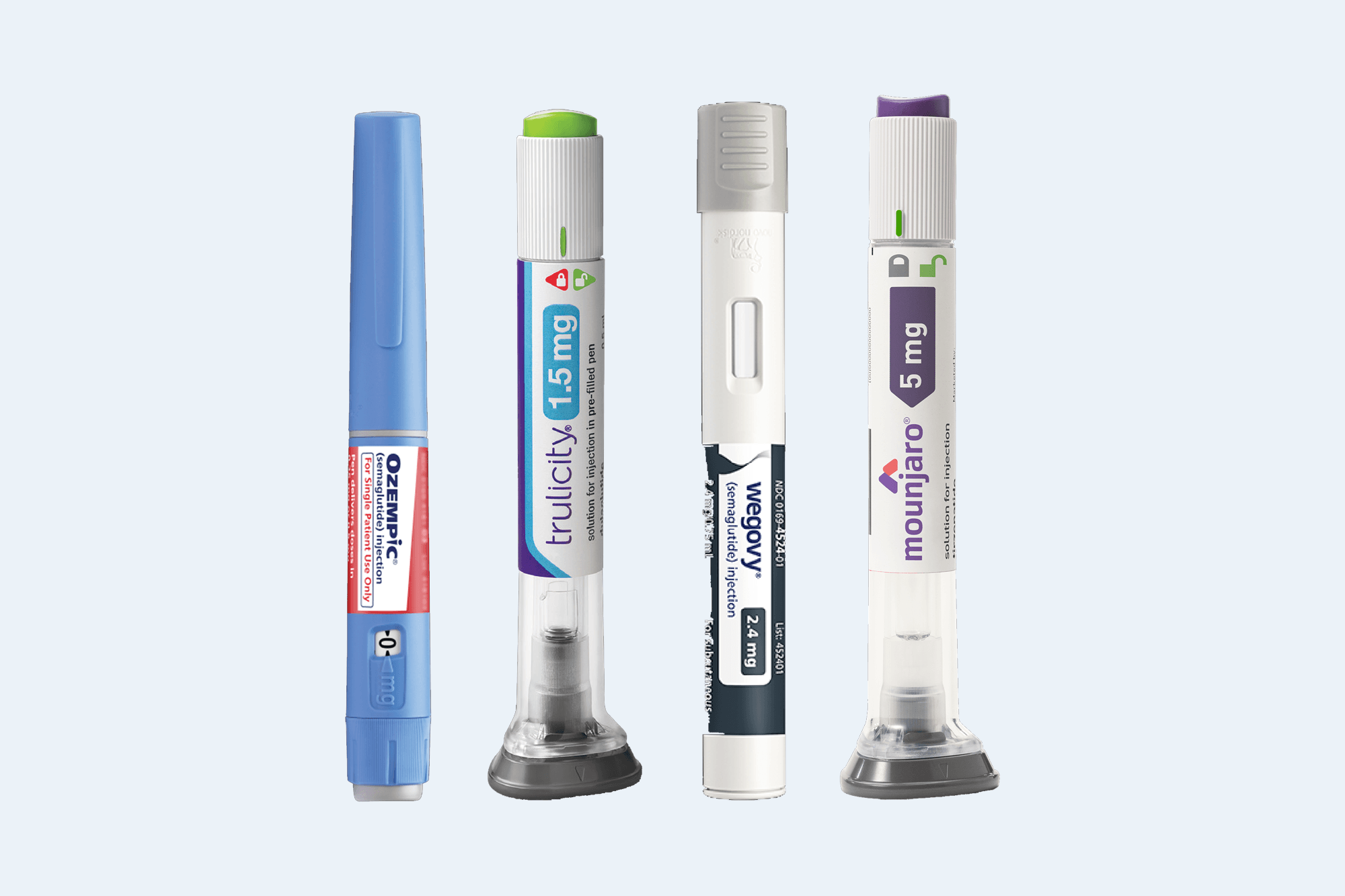
Wegovy and Ozempic contain semaglutide. Zepbound and Mounjaro contain tirzepatide. These names are not interchangeable, and the products do not all have identical approved uses.

Helimeds also provides Zepbound treatment information for its branded-medication service.

Formulation and route matter, too. Wegovy labeling includes oral and injectable formulations; it is no longer accurate to describe every GLP-1 medicine as a weekly injection. Do not transfer administration or pregnancy-planning instructions between products or routes.

The Wegovy prescribing information and Zepbound prescribing information are the relevant starting points for their respective approved products. Your prescriber or pharmacist can help identify which instructions match what you actually receive.

None of these products should be treated as an established male-infertility therapy. A prescription for obesity or diabetes is different from a prescription intended to treat infertility. Trying to conceive does not, by itself, establish eligibility for weight-management medication.

Compounded preparations need a separate discussion

If your prescription is compounded semaglutide or compounded tirzepatide, tell the clinician that explicitly. "Semaglutide" alone may leave out information needed to understand the preparation.

Compounded drugs are not FDA-approved. The FDA does not review their safety, effectiveness, and quality before marketing, and they should not be described as generic Wegovy, generic Zepbound, or approved interchangeable equivalents. The FDA's information on unapproved GLP-1 products explains this distinction.

A study involving a branded medicine does not establish the fertility effects or performance of a pharmacy's compounded preparation. Adding a vitamin or another ingredient also does not establish a reproductive benefit.

Bring the dispensing label and ingredient information to your appointment. If injection directions are unclear, resolve them with the prescriber or dispensing pharmacist before injecting. Milligrams describe the amount of drug, milliliters describe liquid volume, and syringe units are device markings. They cannot be substituted for one another without the exact concentration and device information.

Fertility planning should consider more than the medication

Semen testing can answer a different question than symptoms can

You cannot reliably judge sperm quality from libido, erection strength, semen appearance, or how well you feel. A man can have normal sexual function and still have a fertility concern. Erectile or ejaculatory difficulty can also affect conception even when sperm production is adequate.

If you already have abnormal semen results, share them with both the fertility clinician and the GLP-1 prescriber. Include whether the sample was collected before or after treatment started and whether other health changes occurred around that time.

A single result may not explain the cause of a problem. Semen measurements can vary, and your clinician may recommend repeat testing or a broader evaluation. Testing should answer a clinical question rather than serve as an automatic requirement for every man taking a GLP-1 medication.

A reproductive urologist, a urologist who specializes in male fertility, may be helpful when there are abnormal results, testicular concerns, or persistent reproductive symptoms. Evaluating both partners can prevent one suspected factor from receiving all the attention.

Review testosterone and other products as well

A medication review should include more than your GLP-1 prescription. Tell the clinician about testosterone, anabolic steroids, other prescription medicines, nonprescription products, and anything marketed for muscle building, "testosterone support," or fertility.

Low testosterone symptoms and fertility goals need to be considered together. Testosterone treatment can suppress sperm production, so it should not be assumed to improve fertility simply because testosterone is involved in reproductive function. Do not start or stop hormonal treatment without a coordinated plan.

The same principle applies to sexual-health treatment. Erection response, libido, ejaculation, and sperm production are separate functions. A treatment that helps one does not necessarily improve the others.

Bring the actual product names rather than describing a supplement only as a "men's health vitamin." Ingredient lists may contain information that changes the assessment. This also helps the clinician identify avoidable interactions or overlapping treatments.

Nutrition and tolerability belong in the plan

If reduced appetite or gastrointestinal symptoms make it difficult to eat adequately, discuss that with your treating clinician. Preconception health does not require the fastest possible weight loss, and poor intake should not be accepted as evidence that treatment is working well.

For tirzepatide, Helimeds' side-effect guide discusses common symptoms and serious risks.

Useful topics include maintaining regular meals, getting adequate nutrition, staying hydrated, and finding sustainable physical activity. A registered dietitian may help when food intake is restricted or symptoms make meals difficult. No particular food, supplement, or injection can guarantee better sperm or conception.

Report changes in sexual desire, erections, ejaculation, energy, or testicular symptoms rather than assuming they are caused by the medication. Timing is useful information, but it does not prove causation. The clinician may need to consider the underlying condition, another medication, nutritional intake, or a separate problem.


How to make a coordinated treatment decision

Weigh the reason for treatment against the uncertainty

The reason you take the medication changes the discussion. Someone receiving treatment for type 2 diabetes needs a plan that preserves blood sugar management if a medication change is being considered. Someone receiving weight-management treatment needs a review of benefits, side effects, health goals, and alternatives.

Stopping treatment without that review can leave the original condition untreated. Continuing automatically without discussing a meaningful fertility concern can also miss an opportunity to investigate. The goal is a coordinated decision with a reason, a follow-up plan, and clear responsibility for prescribing.

The main medication safety limits still matter while trying to conceive. Semaglutide and tirzepatide treatment suitability includes the thyroid C-cell tumor boxed warning. These drugs caused such tumors in rodents; whether they cause them in humans is unknown. Applicable products are contraindicated with a personal or family history of medullary thyroid carcinoma or multiple endocrine neoplasia syndrome type 2, known as MEN 2. This does not mean every thyroid condition is a contraindication.

Helimeds' safety-information resources offer navigation to medication labels, not a replacement for your exact product's prescribing information.

A preconception appointment should not replace ordinary side-effect care. Report persistent gastrointestinal symptoms, difficulty maintaining hydration, or other concerning changes to the treating clinician. Severe or persistent abdominal pain, a serious allergic reaction, or inability to keep fluids down needs prompt medical assessment rather than a routine fertility discussion.

The useful decision is whether treatment fits your health and reproductive plan, not whether all uncertainty can be eliminated.

Bring information that can change the recommendation

You can make the appointment more productive by bringing:

  • The exact medication name, formulation, route, and dispensing label, including whether it is compounded.

  • Why it was prescribed and how your condition has responded.

  • When treatment started and when any reproductive or sexual symptoms appeared.

  • All other medicines, hormones, supplements, and muscle-building products.

  • Previous semen analyses, hormone tests, reproductive diagnoses, and relevant procedures.

  • How long you have been trying to conceive and any fertility-treatment dates.

  • Persistent side effects, substantial appetite changes, or difficulty eating and drinking adequately.

Then ask specific questions. Does your history suggest a reason to change treatment, or is monitoring appropriate? Would semen testing change the plan? If a pause is proposed, what is its purpose, and how will the original condition be managed?

Do not change the dose to test whether a symptom improves on your own. A documented plan makes it easier to interpret what happens and reduces the risk of an unintended gap in care.

Coordinate IUI, IVF, and procedures separately

If you are pursuing intrauterine insemination, or IUI, or in vitro fertilization, or IVF, tell the fertility team about your medication before the treatment cycle. The team needs to know which partner takes it and whether treatment involves a fresh sample, frozen sperm, or a sperm-retrieval procedure.

There is no sound basis for copying an egg-retrieval or pregnancy medication plan onto a male partner's sperm-collection plan. Ask the clinic to explain any medication restriction and how it relates to your circumstances.

Procedures involving sedation or anesthesia raise a separate issue because these medicines can delay stomach emptying. If you are the person undergoing a procedure, tell the procedural and anesthesia teams about treatment and gastrointestinal symptoms. They should provide individualized instructions; do not invent your own withholding schedule.

If clinicians offer different recommendations, ask them to coordinate. Your fertility team and prescribing clinician may be addressing different risks, and a shared explanation can clarify the next step.

The bottom line

Men may be able to take a prescribed GLP-1 medication while trying to conceive, but the evidence does not justify a blanket guarantee of reproductive safety or a promise of improved fertility. Pregnancy-planning instructions for the person carrying a pregnancy should not automatically be applied to the male partner.

Your next step is a medication review with the prescriber, adding the fertility clinician when there are abnormal semen results, symptoms, or planned treatment. Bring the exact product information and reproductive timeline. Do not stop, switch, or adjust treatment independently, and do not delay a needed fertility evaluation while waiting for weight loss.

If your medication is compounded tirzepatide, Helimeds' compounded tirzepatide treatment information describes that service; prescribing depends on clinical review.

This article provides general health information and does not replace advice from your licensed healthcare professional.

Frequently asked questions

Does a man need to stop semaglutide before trying for a baby?

A man should not assume that pregnancy-planning instructions for someone who may become pregnant apply to him. The available male-fertility evidence does not establish a universal stopping interval for every man taking semaglutide. Review the exact product, reason for treatment, and any fertility concerns with the prescriber before making changes.

Can GLP-1 medicines improve sperm count?

Researchers are investigating possible reproductive effects, including changes in semen measurements among men with metabolic conditions. The evidence is too limited to promise that a particular GLP-1 medication will improve an individual's sperm count or chance of pregnancy. These medicines should not replace an evaluation for suspected male infertility.

If my partner becomes pregnant while I take a GLP-1, should I stop?

Your use is a paternal-exposure question, which is different from your partner taking the medicine during pregnancy. Your partner becoming pregnant is not, by itself, a reason to make an unsupervised medication change. Tell your prescriber and the prenatal clinician about the exact medicine so they can address any relevant concerns.

Should every man taking a GLP-1 get a semen analysis?

A semen analysis is not automatically necessary solely because a man takes a GLP-1 medication. It may be useful when there is difficulty conceiving, a relevant reproductive history, or a concern that could change treatment decisions. A clinician can explain whether testing would help and how to interpret the result.

Share this post:

Related Posts