

Get GLP1+GIP for $37.25/week
Start Now

Sermorelin vs BPC 157: Benefits, Mechanisms, and Which Peptide Is Right for You?

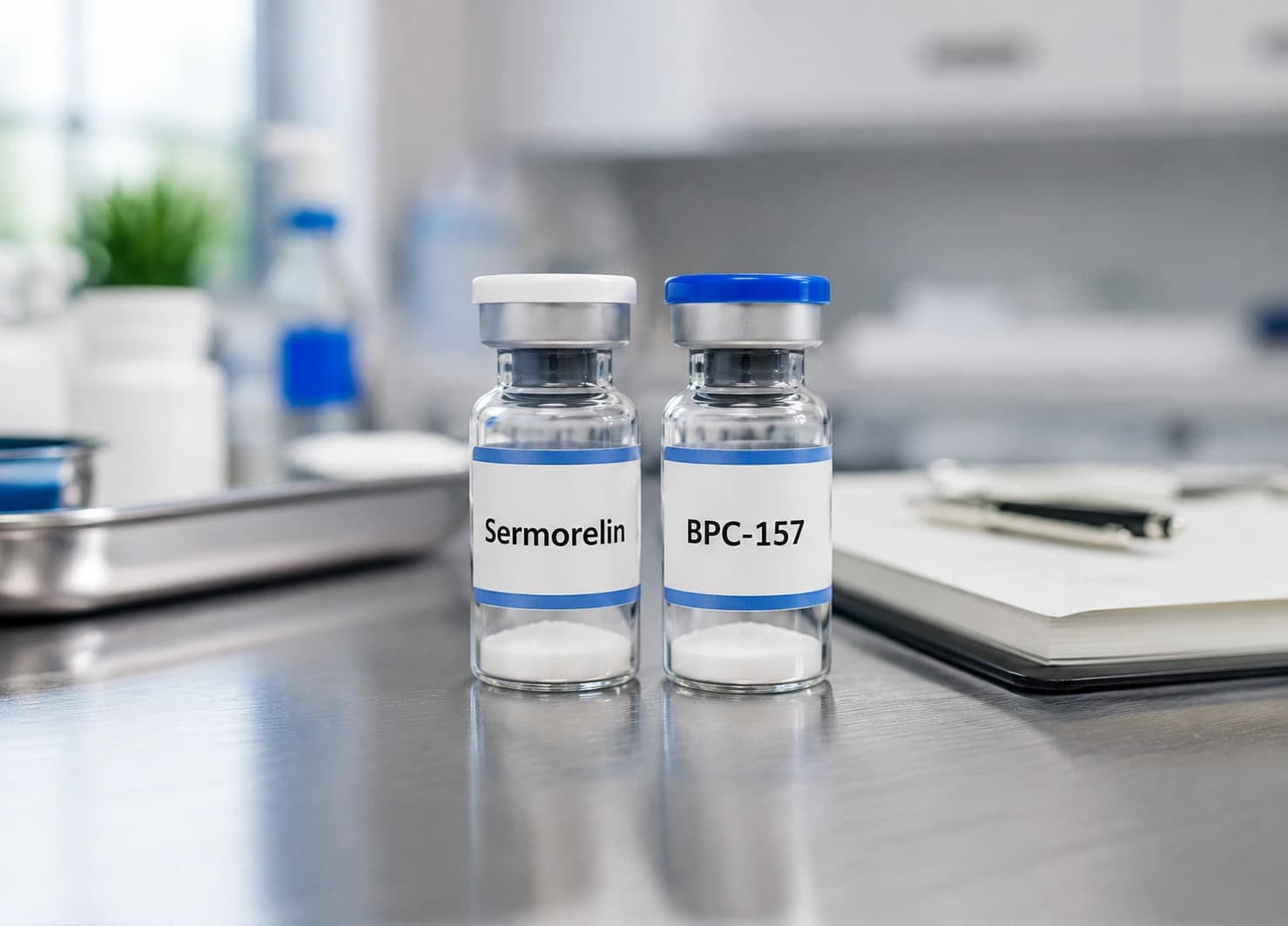
Comparison between Sermorelin and BPC-157
Heli's Fact-Checking Standards

Every piece of content at Heli's adheres to the highest editorial standards for language, style, and medical accuracy. To learn what we do to deliver the best health and lifestyle insights to you, Check out our content review principles.

Sermorelin vs BPC 157

Sermorelin vs BPC 157 is a common comparison in peptide therapy because these compounds are used for very different goals. Sermorelin is generally discussed in the context of growth hormone signaling, energy, body composition, and age-related hormone support. BPC 157 is more often associated with tissue repair, inflammation control, gut support, and injury recovery.

This article compares the two peptides side by side, explains how they work, and looks at how they differ from other healing peptides such as TB-500.

The FDAs Pharmacy Compounding Advisory Committee (PCAC) will review seven peptides to potentially allow compounders to produce them. These include BPC-157, KPV, TB-500, MOTs-C, Emideltide (DSIP), Semax, and Epitalon. The review follows a shift in oversight to potentially increase access to these substances.
Key details regarding the July 2026 review:

July 23, 2026 Review: BPC-157 (wound/injury), KPV (inflammation), TB-500 (wound healing), and MOTs-C (obesity/osteoporosis).
July 24, 2026 Review: Emideltide (opioid withdrawal/insomnia), Semax (ischemia/migraine), and Epitalon (insomnia).
Purpose: To determine if these peptides can be added to the 503A bulk drugs list, allowing compounding pharmacies to create them, reversing earlier restrictions.
These peptides are currently heavily utilized in wellness, longevity, and restorative medicine but have faced regulatory uncertainty regarding their safety and legality.
[6:08 PM]source:
https://www.fda.gov/advisory-committees/advisory-committee-calendar/july-23-24-2026-meeting-pharmacy-compounding-advisory-committee-07232026


How Sermorelin Fits Into Growth Hormone Support

BPC 157 stands for Body Protection Compound 157. It is a 15-amino-acid peptide associated with a protective protein found in human gastric juice.

Unlike Sermorelin, BPC 157 is not primarily a hormone-modulating peptide. It is more often discussed as a repair-focused compound because of its proposed effects on inflammation, tissue healing, angiogenesis, and mucosal protection.

Molecular Origin and Healing Properties

BPC 157 is studied for its ability to support tissue repair under stress. Preclinical research suggests it may influence nitric oxide pathways, vascular endothelial growth factor, and cellular survival mechanisms involved in wound healing and tissue regeneration.

These effects are why BPC 157 is commonly discussed in relation to tendon injuries, ligament recovery, gut health, wound repair, and inflammation control.

Therapeutic Applications and Considerations

BPC 157 is explored for several recovery-related use cases, including joint support, soft-tissue healing, gastrointestinal irritation, and mucosal repair. Human trials remain limited, so much of the discussion comes from preclinical research, clinician experience, and user reports.

In informal discussions, BPC 157 may be misspelled as “PBC 157” or written as “BPC-157.” These names generally refer to the same peptide, although product quality, formulation, and purity can vary.

TB-500 and BPC-157: How They Are Compared

TB-500 is another healing peptide commonly discussed alongside BPC 157. While BPC 157 is often associated with localized repair and gut-related protection, TB-500 is typically discussed for broader soft-tissue recovery, flexibility, and cellular migration.

Together, BPC 157 and TB-500 are sometimes used in recovery-focused peptide protocols. The idea is that BPC 157 may support localized healing and inflammation control, while TB-500 may support tissue remodeling and repair-cell movement.

This combination is most often discussed by people dealing with tendon issues, recurring soft-tissue injuries, training-related inflammation, or recovery limitations. However, combining peptides increases complexity and should be reviewed with a qualified healthcare professional.

Benefits of Sermorelin Peptide

Sermorelin is most relevant when the primary goal is systemic growth hormone support rather than localized tissue repair.

Potential benefits discussed in clinical and wellness settings include:

  • Support for lean body composition

  • Improved sleep quality

  • Better energy and vitality

  • Support for recovery capacity

  • Possible improvements in strength and exercise tolerance

  • Support for bone and connective-tissue health through GH/IGF-1 signaling

For men over 40, Sermorelin is often discussed in relation to age-associated growth hormone decline, reduced recovery, low energy, and changes in body composition. Results are usually evaluated over several months rather than days or weeks.

Benefits of BPC-157 Peptide

BPC 157 is usually discussed for more targeted recovery goals.

Potential BPC 157 benefits include:

  • Tendon and ligament repair support

  • Joint and soft-tissue recovery

  • Reduced inflammatory signaling

  • Gastrointestinal mucosal support

  • Wound-healing support

  • Recovery from training-related irritation or overuse

These effects distinguish BPC 157 from peptides primarily used for hormone modulation. While Sermorelin works through the GH axis, BPC 157 is more closely tied to tissue-level repair pathways.


Growth Hormone Peptides vs Healing Peptides

The simplest way to compare Sermorelin and BPC 157 is to separate peptide categories by goal.

Growth hormone peptides, such as Sermorelin, are used to support endocrine signaling. They are usually discussed in relation to recovery capacity, sleep, body composition, vitality, and age-related hormone changes.

Healing peptides, such as BPC 157 and TB-500, are more often discussed for localized repair, soft-tissue injuries, inflammation control, and recovery from physical stress.

This distinction matters because the “best” peptide depends on the goal. Someone focused on energy, sleep, and GH support may be looking at Sermorelin. Someone dealing with tendon pain, gut irritation, or soft-tissue recovery may be more interested in BPC 157.

Side Effects and Safety Profile

Sermorelin is generally well tolerated when used under medical supervision, but it may affect growth hormone-related markers and glucose metabolism. Monitoring is important, especially for people with metabolic concerns, cancer history, or endocrine disorders.

BPC 157 has shown low toxicity in animal studies, but long-term human safety data remain limited. Reported concerns may include headache, nausea, injection-site irritation, fatigue, or unpredictable responses depending on product quality and route of administration.

Neither peptide should be treated as a casual supplement. Medical guidance is especially important for people with chronic disease, medication use, hormone-sensitive conditions, active malignancy, bleeding disorders, or competitive-sport obligations.

Dosage, Administration, and Access Considerations

Dosing and administration should be individualized by a qualified healthcare professional. Sermorelin protocols vary based on hormone status, IGF-1 response, age, goals, and metabolic markers. BPC 157 protocols vary based on injury type, route of administration, formulation, and treatment goal.

People considering peptide therapy should work with licensed medical providers or regulated pharmacies where applicable. Product quality matters because peptide purity, sterility, labeling accuracy, and storage conditions can vary significantly.

Comparing Effectiveness: Sermorelin vs BPC 157

Choosing between Sermorelin and BPC 157 depends on the goal.

Sermorelin may be more appropriate when the focus is systemic recovery, growth hormone support, sleep, energy, and body composition.

BPC 157 may be more relevant when the focus is localized tissue repair, tendon or ligament recovery, gut support, wound healing, or inflammation control.

Some protocols combine both, aiming to support both endocrine optimization and local tissue repair. This approach should be medically supervised, with monitoring based on the patient’s health history and treatment goals.

Combination Protocols

A combined Sermorelin and BPC 157 approach may be considered when someone has both systemic recovery goals and tissue-repair needs. In this context, Sermorelin supports broader GH-related recovery pathways, while BPC 157 is used for localized repair and inflammation-related goals.

Monitoring may include hormone panels, IGF-1, fasting glucose, A1c, inflammatory markers, symptom tracking, and assessment of recovery progress.

Frequently Asked Questions

Can Sermorelin and BPC 157 Be Used Together?

Some medical protocols combine them to address both systemic recovery and localized repair. A combined approach should be guided by a healthcare professional and monitored with appropriate labs.

Which Peptide Is More Relevant for Sleep and Energy?

Which Peptide Is More Relevant for Joint or Tendon Pain?

Can Competitive Athletes Use Sermorelin or BPC 157?

What Labs Should Be Monitored With Sermorelin?

What Should Someone Track When Comparing Sermorelin vs BPC 157?

Is Sermorelin Better Than BPC 157 for Muscle Growth?

Is BPC 157 Better Than Sermorelin for Injuries?

Disclaimer: This website connects patients with licensed healthcare providers who can evaluate medical conditions and prescribe medications when appropriate. Some medications available through this service may be compounded drugs, which are customized formulations prepared by a pharmacy. The FDA does not conduct premarket review for compounded drugs to evaluate their safety, effectiveness, or quality. (See here: https://www.fda.gov/consumers/consumer-updates/it-really-fda-approved). Individual results may vary, and these medications should only be used under the guidance of a qualified healthcare professional. The information in this article is for educational purposes only and should not be considered medical advice. Always consult your healthcare provider before starting any new treatment.

How we reviewed this article:
Sources
History

Helimeds has strict sourcing guidelines and relies on peer-reviewed studies, academic research institutions, and medical associations. We avoid using tertiary references. You can learn more about how we ensure our content is accurate and current by reading our editorial policy.

Share this post:

Related Posts