
Sildenafil (the active ingredient in Viagra) is a prescription medicine commonly used to treat erectile dysfunction (ED) in adults. A practical way to frame the question of how long does sildenafil last is: it usually provides a several-hour window in which erections are easier to achieve and maintain when you’re sexually stimulated—but the “best” part of that window is often earlier, not later.
Heli's Fact-Checking Standards
Every piece of content at Heli's adheres to the highest editorial standards for language, style, and medical accuracy. To learn what we do to deliver the best health and lifestyle insights to you, Check out our content review principles.
How Long Does Sildenafil Last and How Long Is Sildenafil Effective?
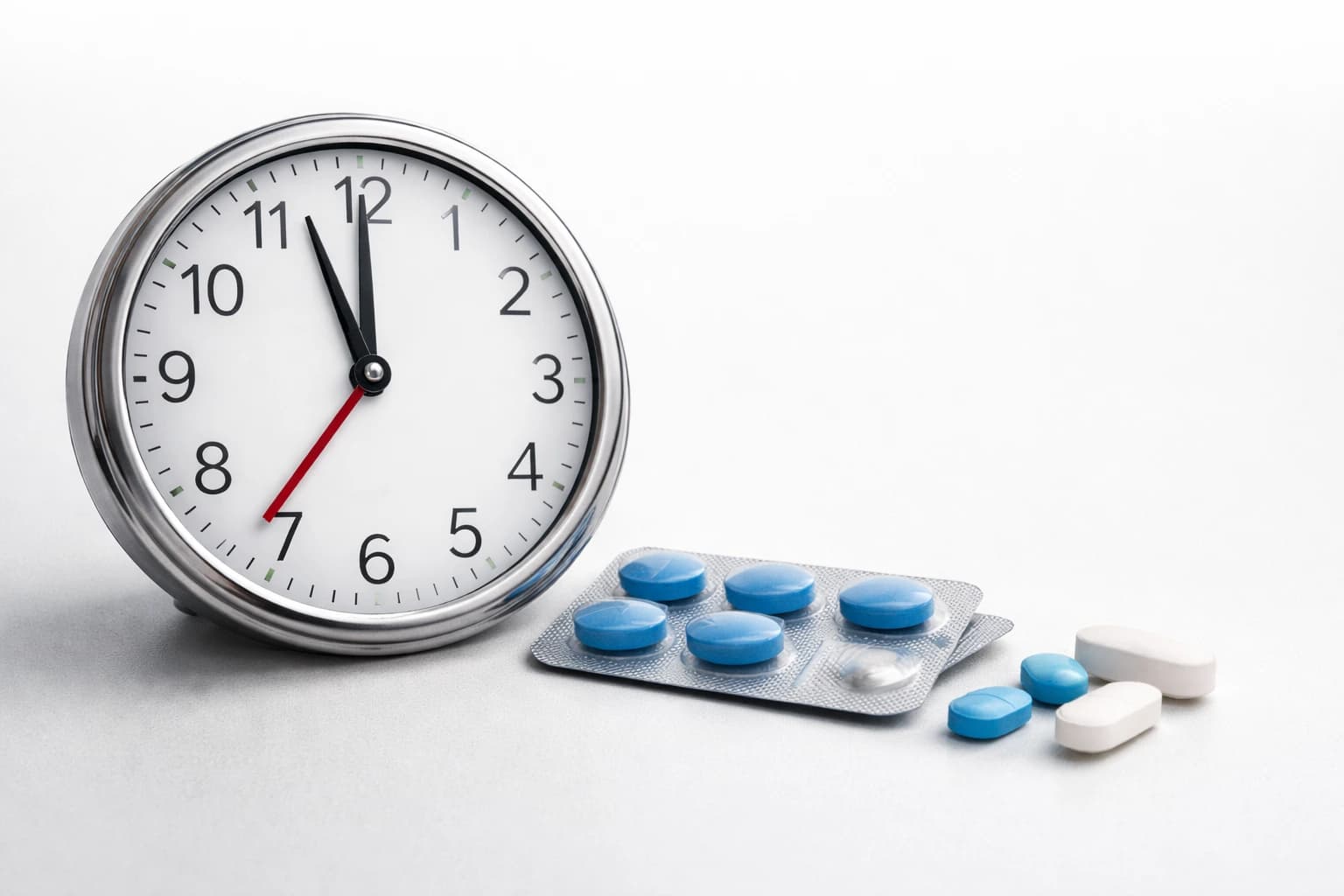
For most people taking sildenafil for ED, the functional effect is often described as lasting up to about 4 hours, with a common real-world range of roughly 4–6 hours. That aligns with patient guidance from the NHS overview of sildenafil and is consistent with pharmacokinetic information in the Viagra prescribing information.
Two points matter for expectations:
Sildenafil does not cause an automatic erection. You still need sexual stimulation and arousal for it to work (as emphasized by the NHS key facts and MedlinePlus).
“Duration” is not the same as “time in the body.” The question how long is sildenafil effective is about the time you can realistically benefit from it for ED, not how long it can be detected in blood.
What “Lasting” Means: Erection Support vs Blood Levels
It helps to separate two concepts:
Functional duration (what you feel): how long the medication can support erections when aroused. This is what most people mean when they ask how long does sildenafil last.
Pharmacokinetic duration (what labs can measure): how long does sildenafil stay in your system, which relates to metabolism and clearance.
You can still have small amounts of sildenafil circulating after the reliable erection-supporting window has faded. That’s normal for many medicines, and it’s why “detectable” does not equal “clinically useful.”
What the “Several-Hour Window” Usually Looks Like
People often notice the strongest effect around the time blood levels peak and then a gradual taper. Clinically, the goal is not a continuous erection for hours (that would be dangerous), but rather improved responsiveness during arousal across a reasonable window.
Patient-facing guidance commonly advises taking sildenafil 30 minutes to 4 hours before sexual activity, and many people aim for about an hour before (see MedlinePlus guidance and NHS dosing guidance). This reflects the reality that efficacy is highest when timing and absorption line up well.
How Long Does It Take for Sildenafil to Work and When Does Sildenafil Peak?
The next two timing questions usually follow immediately: how long does it take for sildenafil to work and when does sildenafil peak.
For ED, many sources describe onset in the 30–60 minute range under typical conditions. The NHS states it “usually takes 30 to 60 minutes” to work for ED, and that you can take it up to 4 hours before sex (see NHS key facts). MedlinePlus similarly notes it can be taken from 30 minutes to 4 hours before sexual activity, with “about 1 hour” often being a good target (see MedlinePlus).
As for peak effect, the drug label describes peak plasma concentrations typically occurring within 30 to 120 minutes in the fasted state, with a median around 60 minutes (see the Viagra prescribing information). In everyday terms, that’s why many people plan for the first couple of hours after dosing to be the most reliable.
Empty Stomach vs High-Fat Meal
Food can meaningfully shift timing. The prescribing information explains that a high-fat meal can reduce the rate of absorption, delaying the time to peak (Tmax) and reducing peak concentration (Cmax) (see the Viagra prescribing information). Practically, that may mean you still get an effect, but it arrives later and may feel less “strong at the peak.”
This food effect is a common reason sildenafil feels inconsistent. If one day you take it after a heavy dinner and another day on a lighter meal, the timing and intensity can be different even at the same dose.
Viagra Timing Questions Are the Same Timing Questions
Because Viagra is sildenafil, the practical timing questions overlap. If you’re asking how long does it take for viagra to work, the answer is generally similar: often about 30–60 minutes, later if taken after a heavy meal (see NHS key facts and MedlinePlus). If you’re asking when does viagra peak, the peak plasma timing described in labeling is the same pharmacology (see the Viagra prescribing information).
How Long Does Sildenafil 25 mg Last, 50 mg, and 100 mg Last?
Dose can change how strong the effect feels and how likely it is to work, but it doesn’t turn sildenafil into an “all day” medication. Standard ED tablet strengths range from 25 mg to 100 mg, and the NHS notes 50 mg is a usual dose, adjusted upward or downward based on effect and tolerability (see NHS dosing guidance).
25 mg
If you’re prescribed a lower dose, it’s reasonable to ask: how long does sildenafil 25 mg last? The overall timing pattern is typically similar (onset often within an hour; a several-hour window), but the peak effect may be milder. A milder peak can make the “tail end” feel less noticeable, even if the medicine is still present.
Lower doses may be used when side effects are an issue or when a clinician expects higher exposure (for example, with older age or certain interacting medicines), and dosing should be individualized.
50 mg
The most common starting point for many adults leads to a common question: how long does sildenafil 50 mg last? Many people plan around a several-hour window, and both NHS and MedlinePlus guidance support a dosing window from 30 minutes up to 4 hours before sex (see NHS and MedlinePlus).
What often matters most at 50 mg is not “making it last longer,” but matching the dose to your real-world conditions (meals, alcohol, stress, and adequate stimulation).
100 mg
For people who don’t respond well at lower doses, the question becomes: how long does sildenafil 100 mg last? A higher dose can increase exposure and may improve reliability for some people, but it also increases side effects. Labels and patient guidance generally advise not taking ED sildenafil more than once per day, and not exceeding prescribed dosing (see MedlinePlus dosing cautions).
If you’re thinking about higher dosing, that’s a clinician conversation. “More” is not always “better,” especially if dizziness, headaches, flushing, or blood pressure drops become limiting.
How Long Does Viagra Last vs How Long Does Generic Viagra Last?
People often ask how long does viagra last and then immediately ask how long does generic viagra last. For approved generics, the core expectation is that the timing and effect profile should be comparable at the same dose because the active ingredient is the same (sildenafil). Regulatory standards require generics to meet quality and bioequivalence expectations, and the FDA has specifically addressed common misunderstandings around bioequivalence ranges (see the FDA resource on dispelling the 80–125% myth).
That said, individual experience can still vary. Differences in inactive ingredients, tablet hardness, and how a person takes the medication (with food, with alcohol, at different times of day) can change what the response feels like. If you notice a consistent change after switching manufacturers, it’s worth discussing with a pharmacist and prescriber rather than “chasing” it by increasing doses on your own.
Sildenafil Half Life, Viagra Half Life, and How Long the Drug Stays in Your System
The questions sildenafil half life and viagra half life point to the same pharmacology. In drug labeling, sildenafil’s terminal half-life is typically described in the range of a few hours (commonly around 4 hours), which is part of why a single dose supports erections for hours rather than minutes or days (see the Viagra prescribing information).
Now connect that to clearance:
If you’re asking how long does sildenafil stay in your system, you’re asking about metabolism and elimination.
If you’re asking how long does viagra stay in your system, it’s the same idea, since Viagra is sildenafil.
A common pharmacology rule of thumb is that it takes about five half-lives for most of a drug to be cleared from plasma. With a half-life of a few hours, that means much of the drug is usually cleared over roughly a day in many people—though the exact timing varies with age, liver function, kidney function, and interacting medicines.
BlueChew, Cenforce, and Pill-Imprint Questions
If a product truly contains sildenafil, the broad timing principles above generally apply. That’s the most helpful lens for questions like how long does bluechew last, how long does bluechew stay in your system, and how long does cenforce 100 last: the name or format matters less than the confirmed active ingredient, dose, and your personal factors (meals, alcohol, metabolism, interactions).
Chewable formats may feel faster for some people, but the main driver of duration is still the same metabolism and half-life described in labeling. If you use any subscription or telehealth service, it should provide clear documentation of what you’re prescribed, and you should be able to confirm the active ingredient and dose.
Imprints and Color Are Not Enough to Confirm Safety
Questions like 88 blue pill how long does it last, teva 5343 how long does it last, and an354 pill how long does it last often show up when someone is trying to identify a tablet. The key safety point: color and shape are not proof of authenticity, and counterfeit ED pills are a known problem.
For TEVA 5343 specifically, the imprint corresponds to a sildenafil tablet in authoritative drug labeling resources (see DailyMed’s sildenafil tablet listing). If a verified tablet is sildenafil, the timing is sildenafil’s timing. But if you can’t verify a pill’s identity through a pharmacist or a trusted database, it’s not safe to assume what it contains.
You may also come across typos in discussions and search results—how long does sidenafil last is a common example. What matters is confirming you’re actually dealing with sildenafil (and not a different drug or a counterfeit), then applying the correct timing and safety guidance.
Factors That Can Make Sildenafil Last Shorter or Longer
Even with the same dose, the experience can vary. Common factors include:
Food and Absorption
High-fat meals can delay absorption and reduce peak concentration, which can make the effect feel slower, weaker, or mistimed (see the Viagra prescribing information). If timing is important, taking sildenafil on an empty stomach or after a light meal may be more predictable.
Alcohol and Blood Pressure
Alcohol can worsen ED and increase side effects like dizziness or lightheadedness. In practical terms, heavy drinking can make sildenafil feel like it “didn’t work,” even when the drug is present.
Age and Health Conditions
Older age can increase exposure and sometimes prolong clearance. Liver and kidney impairment can also alter drug levels and side effects; this is one reason clinicians may start lower and adjust based on response and safety.
Drug Interactions and Contraindications
Some interactions are not “minor.” Sildenafil should not be combined with nitrates due to the risk of dangerous drops in blood pressure, and people with specific heart conditions may need careful evaluation (see the contraindications and warnings in the Viagra prescribing information). Always tell your clinician about all prescription drugs, over-the-counter medicines, and supplements you take.
If you develop chest pain, severe dizziness, fainting, sudden vision changes, or an erection lasting longer than 4 hours, seek urgent medical care. These risks are highlighted in official patient information such as MedlinePlus.
How to Use Sildenafil Safely for the Best Results
If you’re prescribed sildenafil for ED, the goal is predictable, safe use—not pushing the limits of dosing or trying to “extend” effect beyond what your body can safely handle.
Practical, safety-forward tips consistent with patient guidance include:
Plan ahead: many people take it about an hour before sex, but the acceptable window can be broader (see MedlinePlus timing guidance).
Consider meals: avoid very heavy, high-fat meals if you want a faster onset (see the Viagra prescribing information).
Don’t double-dose: do not take more than prescribed or more often than recommended (see MedlinePlus).
Make space for stimulation: sildenafil supports erections during arousal; it isn’t a libido drug and won’t “override” lack of stimulation (see NHS key facts).
Address underlying issues: ED can be linked to cardiovascular risk factors, diabetes, medication side effects, anxiety, or relationship stress. A clinician can help identify root causes and choose the safest approach.
If you are under 18 or not sure sildenafil is appropriate for you, don’t self-treat—talk to a healthcare professional. ED medicines should be used in the context of proper medical evaluation and prescribing.
Frequently Asked Questions
How long does sildenafil last for most people?
Most people experience a several-hour window in which erections are easier to achieve and maintain with sexual stimulation. The effect is often strongest in the first couple of hours and then gradually tapers. Many people plan around about 4 hours, though some experience a longer or shorter window.
How long does sildenafil stay in your system?
Can food change how long it lasts or how well it works?
Is generic Viagra different from Viagra in how long it lasts?
What if it works sometimes but not others?
When should I avoid sildenafil or seek urgent help?
Disclaimer
Disclaimer: This website connects patients with licensed healthcare providers who can evaluate medical conditions and prescribe medications when appropriate. Some medications available through this service may be compounded drugs, which are customized formulations prepared by a pharmacy. The FDA does not conduct premarket review for compounded drugs to evaluate their safety, effectiveness, or quality. (See here: https://www.fda.gov/consumers/consumer-updates/it-really-fda-approved). Individual results may vary, and these medications should only be used under the guidance of a qualified healthcare professional. The information in this article is for educational purposes only and should not be considered medical advice. Always consult your healthcare provider before starting any new treatment.
How we reviewed this article:
Sources
History
Helimeds has strict sourcing guidelines and relies on peer-reviewed studies, academic research institutions, and medical associations. We avoid using tertiary references. You can learn more about how we ensure our content is accurate and current by reading our editorial policy.
U.S. Food and Drug Administration. Viagra (sildenafil citrate) Prescribing Information. 2011. https://www.accessdata.fda.gov/drugsatfda_docs/label/2011/020895s036lbl.pdf
NHS. About Sildenafil (Viagra). 2022. https://www.nhs.uk/medicines/sildenafil-viagra/about-sildenafil-viagra/
NHS. How and When to Take Sildenafil. 2022. https://www.nhs.uk/medicines/sildenafil-viagra/how-and-when-to-take-sildenafil/
MedlinePlus (U.S. National Library of Medicine). Sildenafil. 2023. https://medlineplus.gov/druginfo/meds/a699015.html
U.S. Food and Drug Administration. Basic HCP 101: Dispelling the 80–125% Myth (Bioequivalence). 2021. https://www.fda.gov/media/156312/download
DailyMed (U.S. National Library of Medicine). Sildenafil Tablet, Film Coated: Drug Label Information and Imprint Details. https://dailymed.nlm.nih.gov/dailymed/drugInfo.cfm?setid=5cbac450-f336-45bd-8d10-9ecfd21866eb