

Get GLP1+GIP for $37.25/week
Start Now

BPC-157 Oral vs Injection: Which Form Works Best for Healing and Recovery?

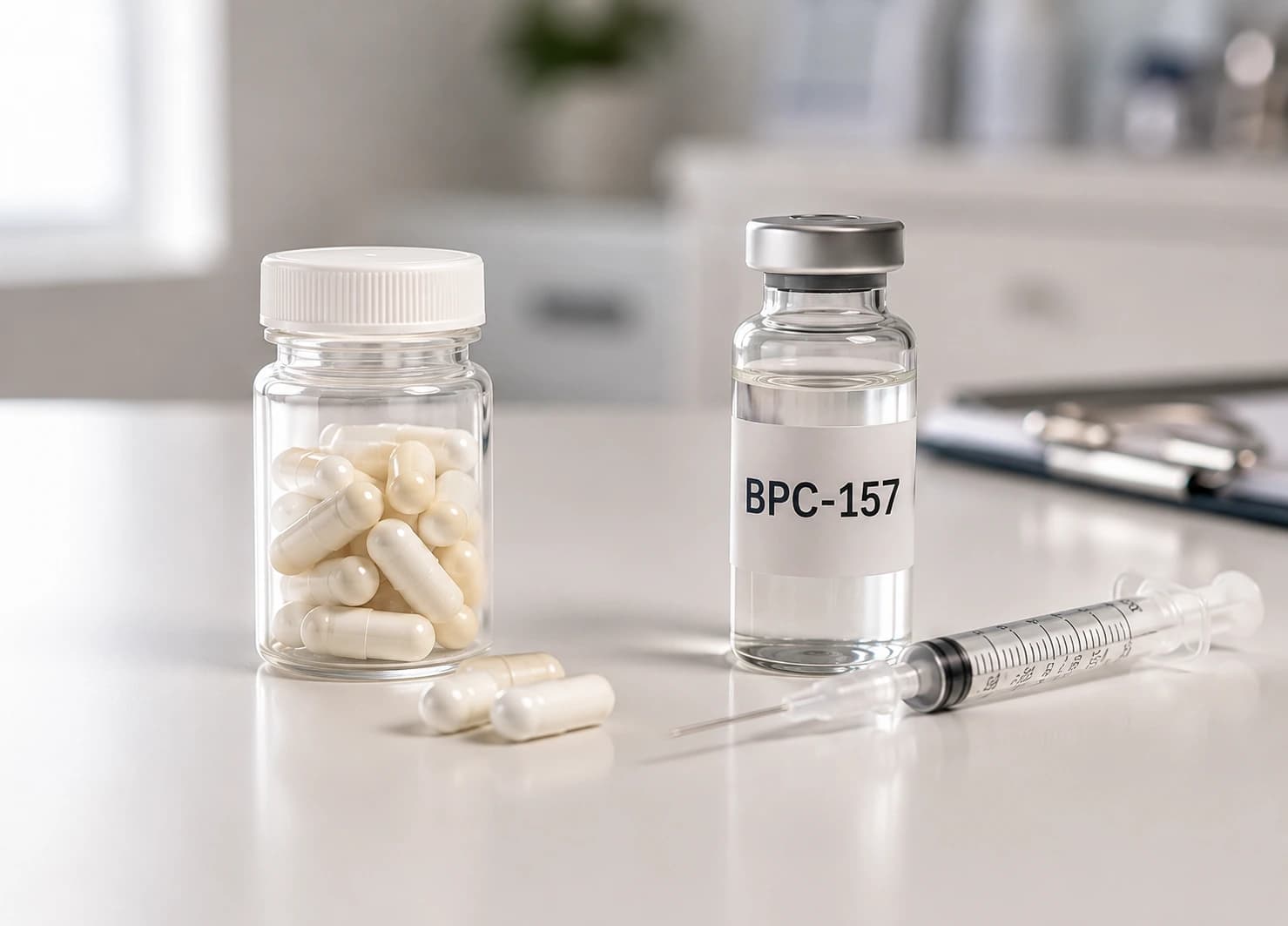
A bottle of BPC-157 and BCP-157 pills
Heli's Fact-Checking Standards

Every piece of content at Heli's adheres to the highest editorial standards for language, style, and medical accuracy. To learn what we do to deliver the best health and lifestyle insights to you, Check out our content review principles.

How BPC-157 Works and Why Bioavailability Matters

BPC-157 is a synthetic peptide derived from a natural fragment of human gastric juice. Preclinical studies suggest it promotes angiogenesis (new blood vessel formation), collagen synthesis, and modulation of nitric oxide pathways—key steps in tissue repair. A common question is: does bpc 157 work? In animal models, oral BPC-157 reduced gut-ulcer lesions by up to 60% and accelerated tendon healing within two weeks. Human data remain limited to case reports, so efficacy in clinical practice is still under evaluation.

Bioavailability is central to the bpc 157 oral vs injection debate. Peptides are often broken down by stomach acid, yet BPC-157 appears relatively stable in gastric environments. Injected BPC-157 peaks in plasma within 15–30 minutes, while oral bpc 157 produces a more gradual rise and longer plateau. These pharmacokinetic differences inform the trade-offs in onset, convenience, and dosing convenience.

The FDAs Pharmacy Compounding Advisory Committee (PCAC) will review seven peptides to potentially allow compounders to produce them. These include BPC-157, KPV, TB-500, MOTs-C, Emideltide (DSIP), Semax, and Epitalon. The review follows a shift in oversight to potentially increase access to these substances.
Key details regarding the July 2026 review:

July 23, 2026 Review: BPC-157 (wound/injury), KPV (inflammation), TB-500 (wound healing), and MOTs-C (obesity/osteoporosis).
July 24, 2026 Review: Emideltide (opioid withdrawal/insomnia), Semax (ischemia/migraine), and Epitalon (insomnia).
Purpose: To determine if these peptides can be added to the 503A bulk drugs list, allowing compounding pharmacies to create them, reversing earlier restrictions.
These peptides are currently heavily utilized in wellness, longevity, and restorative medicine but have faced regulatory uncertainty regarding their safety and legality.
[6:08 PM]source:
https://www.fda.gov/advisory-committees/advisory-committee-calendar/july-23-24-2026-meeting-pharmacy-compounding-advisory-committee-07232026


BPC-157 Oral vs Injection: Benefits, Risks, and Efficacy

When comparing the two routes, consider onset of action, safety, convenience, and cost.

• Onset of Action
– Injectable: Subcutaneous or intramuscular bpc 157 injection enters the bloodstream quickly, often showing effects within 1–2 days in animal studies.
– Oral: Oral BPC-157 typically requires 3–7 days of consistent dosing before users notice benefits.

• Safety and Tolerability
– Injectable: Mild local irritation can occur at injection sites; systemic adverse events are rare in preliminary reports.
– Oral: Some individuals experience transient gastric discomfort with oral bpc 157; serious events have not been documented in limited human observations.

• Convenience and Cost
– Capsules: No needles or sterile technique required; capsules can be taken anywhere.
– Injections: Require reconstitution, syringes, and safe sharps disposal; generally 20–30% higher cost when accounting for supplies.

Feature

Oral BPC-157

Injectable BPC-157

Efficacy

Moderate, delayed

High, rapid

Onset

3–7 days

1–2 days

Convenience

Easy capsules

Requires training

Cost

Lower per dose

Higher per cycle

Best BPC-157 Capsules: Selecting Quality Oral BPC-157

For those prioritizing capsules, look for third-party testing on bpc-157 capsules to ensure purity and potency. Key criteria include:
• Certificate of Analysis (COA) showing ≥98% purity
• GMP-certified manufacturing facilities
• Enteric-coated or micro-encapsulated formulations to protect the peptide
• Clear labeling of dosage strength (250–500 mcg per capsule)
• Verified customer feedback on independent platforms

BPC-157 Pills Dosage and Absorption

Typical bpc 157 pills protocols start at 250 mcg once or twice daily on an empty stomach. To optimize absorption:
• Take capsules with plain water at least 30 minutes before meals
• Some users add a small amount of baking soda solution to transiently raise gastric pH
• Splitting the daily dose (morning and evening) may maintain steadier plasma levels

Injectable BPC-157 Protocols: Dosage, Preparation, and Safety

For those opting for injections, sterile technique and accurate dosing are essential.

  1. Sanitize your workspace and alcohol-swab the vial stopper.

  2. Reconstitute lyophilized powder with bacteriostatic water (e.g., 1 mL to 5 mg).

  3. Gently swirl—avoid shaking to prevent denaturation.

  4. Label with date and store at 2–8 °C for up to 30 days.

Recommended dosing:
• Subcutaneous: 200–500 mcg per injection once or twice daily, rotating sites.
• Intramuscular: 500 mcg near the injury site for localized effect.
• Typical cycle: 4–8 weeks; shorter courses (2–4 weeks) may help minor strains.

Monitor for mild injection-site redness or systemic effects like headache. Long-term safety data in humans are lacking, so periodic lab work (liver and kidney panels) is advisable for extended courses.

Oral Peptides: BPC-157 and Emerging Clinical Applications

Oral peptides are a growing category in drug development. Most peptides have <5% bioavailability, but BPC-157’s unique stability allows an estimated 10–20% absorption in animal models. Other compounds in this field include epitalon and thymalin. Future research focuses on advanced delivery systems and human trials for conditions such as Crohn’s disease, tendon injuries, and chronic ulcers. For a broader overview, see the AJMC article on oral peptides.

Deciding Between Oral BPC-157 vs Injection: Personalized Recommendations

Choosing between bpc 157 oral vs injection depends on several factors:
• Injury Severity: Acute tears may benefit from rapid, high-peak levels via injection. Chronic or low-grade conditions often respond to oral dosing.
• Lifestyle and Compliance: Capsules suit travelers and needle-averse users. Injections require training and sharp disposal.
• Medical Supervision: Prescription or research-use protocols for injections should occur under qualified healthcare oversight.

Cost-conscious individuals may start with capsules and reserve injections for stubborn issues. Always consult a healthcare professional before beginning any peptide regimen, particularly for off-label or experimental uses.

Frequently Asked Questions

Is Oral BPC-157 Better for Gut Health?

Oral BPC-157 is often discussed for gastrointestinal concerns because it passes through the digestive tract and appears relatively stable in acidic environments. However, human evidence remains limited.

Is Injectable BPC-157 Better for Tendons or Joints?

Why Do People Choose Capsules Instead of Injections?

Why Do Some People Prefer Injectable BPC-157?

Can Oral and Injectable BPC-157 Be Compared Directly?

What Should You Track When Comparing Forms?

Can BPC-157 Be Used for Both Gut and Injury Recovery?

Disclaimer: This website connects patients with licensed healthcare providers who can evaluate medical conditions and prescribe medications when appropriate. Some medications available through this service may be compounded drugs, which are customized formulations prepared by a pharmacy. The FDA does not conduct premarket review for compounded drugs to evaluate their safety, effectiveness, or quality. (See here: https://www.fda.gov/consumers/consumer-updates/it-really-fda-approved). Individual results may vary, and these medications should only be used under the guidance of a qualified healthcare professional. The information in this article is for educational purposes only and should not be considered medical advice. Always consult your healthcare provider before starting any new treatment.

How we reviewed this article:
Sources
History

Helimeds has strict sourcing guidelines and relies on peer-reviewed studies, academic research institutions, and medical associations. We avoid using tertiary references. You can learn more about how we ensure our content is accurate and current by reading our editorial policy.

Share this post:

Related Posts