Why am I not losing weight on Wegovy?

Medically reviewed by: Dr. Alexandra Christiansen, MD
Written by: Ori Otokpa
Helimeds’ Fact-Checking Standards. Every piece of content at Helimeds adheres to the highest editorial standards for language, style, and medical accuracy. To learn what we do to deliver the best health insights to you, check out our content review principles.
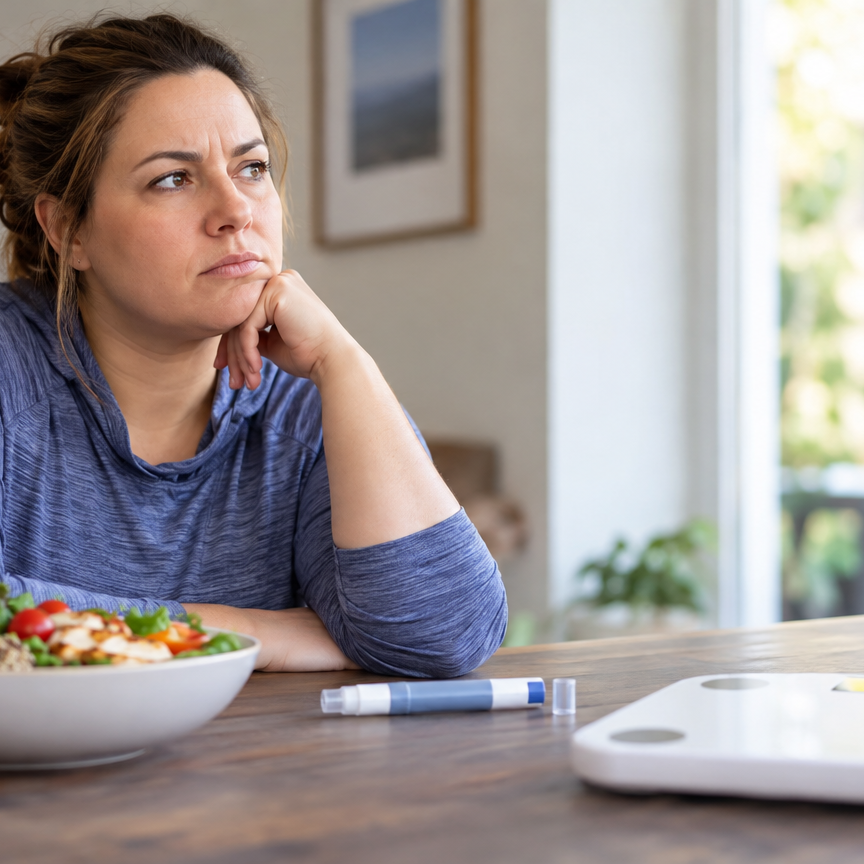
If you’re not losing weight on Wegovy®, you may still be in the early stages of treatment, or your weight may be fluctuating enough to hide a gradual change. Missed doses, other medications, health conditions and individual differences in response can also play a part. A period without weight loss doesn’t necessarily mean you’ve done anything wrong or that the medication has stopped working.
The most useful next step is to review your progress with your prescriber, especially if you’ve been taking Wegovy for a while without a downward trend. They can consider how long you’ve taken it, your treatment plan, side effects and other factors before recommending changes.
How Wegovy affects weight
Wegovy is a prescription medication containing semaglutide. It acts on a hormone pathway involved in appetite regulation and can help people feel less hungry. It’s used alongside a reduced-calorie eating plan and increased physical activity for weight management. (accessdata.fda.gov)
The effect is different for each person. A change in appetite doesn’t guarantee a particular amount of weight loss, and a slow response doesn’t automatically mean treatment has failed.
Possible reasons the scale isn’t moving
You may still be adjusting to treatment
Wegovy treatment starts at a lower dose and is increased gradually to help your body adjust. This process is called dose escalation or titration. Some people see weight changes early, while others see little change at first. (accessdata.fda.gov)
Your prescriber may adjust the schedule based on how you tolerate treatment. If you’re concerned about your progress, ask where you are in your plan and when your response should be reviewed. Don’t increase your dose or change your schedule on your own.
Your weight may be fluctuating
A single weigh-in can’t tell you much about your longer-term response. Fluid changes and constipation, for example, can affect the number on the scale from day to day.
If weighing yourself is comfortable for you, compare measurements taken under similar conditions rather than judging progress by one reading. Your prescriber can help you look at the trend alongside changes in appetite and how you feel.
You may have reached a plateau
A plateau means weight loss has slowed or stopped after an earlier period of loss. It isn’t the same as seeing no change from the start, and it doesn’t necessarily mean Wegovy has stopped having an effect.
As body weight changes, the amount of energy your body uses can change too. Your eating, activity, sleep or treatment routine may also have shifted. A plateau is a reason to review the whole plan, not to assume that you need a higher dose or a more restrictive diet. (niddk.nih.gov)
Your medication routine may need a closer look
Missed doses and interruptions, or uncertainty about how to use or store your medication, are worth discussing with your prescriber or pharmacist. For an injection, they can review your pen technique with you. Follow the instructions for your specific product, and ask for guidance if you’ve missed doses rather than trying to make up a dose yourself.
Tell your provider if side effects, scheduling or difficulty obtaining medication have made the routine hard to follow. Those details help them understand what has been manageable in practice.
Eating, activity and sleep still matter
Wegovy can reduce appetite, but it doesn’t replace a manageable eating and activity plan. Eating less at a meal doesn’t always show the full picture of what you eat and drink throughout the day. At the same time, a stalled scale is not proof that you’re overeating.
A few observations may help you and your provider decide what to discuss:
- Meals and drinks: Are you eating regular, balanced meals? Would a brief record of meals, snacks and drinks help reveal a pattern?
- Activity: What movement fits your health and schedule? Walking and strength exercises are examples to discuss with your provider.
- Sleep and stress: Have poor sleep or stress made it harder to follow your usual routine?
- Side effects: Is nausea or another symptom making it difficult to eat or drink comfortably?
You don’t have to count calories to have a useful conversation. A registered dietitian can help you make a plan that supports adequate nutrition without relying on extreme restriction.
Other health factors or medications may matter
Conditions such as hypothyroidism or polycystic ovary syndrome can affect weight management. Some medications can also contribute to weight gain. That doesn’t mean one of these is necessarily the cause of your experience. (niddk.nih.gov)
Give your prescriber a complete list of your medications and relevant health conditions. They can decide whether further evaluation is appropriate. Don’t stop another prescribed medication because you suspect it is affecting your weight.
When to talk with your prescriber
You can raise concerns at any point. A review is especially useful if you’ve been on treatment for several months with little change, have reached a maintenance dose without the progress you expected, or lost weight initially and then experienced a sustained plateau.
Bring the following to the conversation:
- When you started Wegovy and your current prescribed dose.
- Any missed doses or interruptions.
- Your weight trend, if you track it, and whether your appetite has changed.
- Side effects and any difficulty eating, drinking or using the medication.
- Your other medications and any health changes since starting treatment.
Your provider may recommend continuing the current approach, adjusting the treatment plan or discussing another option. The decision depends on your response, tolerability and medical history.
Contact your prescriber promptly if side effects make it difficult to eat or drink. Seek urgent medical care for severe or persistent abdominal pain or signs of a serious allergic reaction, such as difficulty breathing or swelling of the face. (accessdata.fda.gov)
What if Wegovy isn’t the right fit?
A limited response is worth reviewing, but it doesn’t tell you on its own which alternative is right for you. Another FDA-approved treatment, such as Zepbound®, may be a topic for discussion with a licensed provider. Don’t switch or combine medications without their guidance.
Compounded semaglutide is a separate option from branded Wegovy. Compounded medications are not FDA-approved and should not be described as equivalent or interchangeable with Wegovy. A provider can discuss the relevant considerations if a compounded pathway is being considered. (fda.gov)
Helimeds offers a Wegovy treatment pathway for people seeking medical weight-management care. Complete a medical intake and consult with a licensed provider. If clinically appropriate, treatment may be prescribed and fulfilled through a licensed pharmacy partner, subject to state availability and medical review.
If the scale hasn’t moved, start by bringing your treatment history and questions to your current prescriber. If you’re seeking care through Helimeds, you can begin an intake to discuss your options with a licensed provider.
History
Current Version
Written by Ori Otokpa
Medically reviewed by Dr. Alexandra Christiansen, MD