Get GLP1+GIP for $37.25/week
Start Now

Does Semaglutide Expire? Storage and Fridge Shelf Life Guide

A person checking if his semaglutide expired
Heli's Fact-Checking Standards

Every piece of content at Heli's adheres to the highest editorial standards for language, style, and medical accuracy. To learn what we do to deliver the best health and lifestyle insights to you, Check out our content review principles.

Semaglutide is a glucagon-like peptide-1 (GLP-1) receptor agonist used in medications such as Ozempic and Wegovy. Because semaglutide is a peptide, proper storage helps preserve potency, stability, and safety.

Many patients ask, “does semaglutide expire?” and “how long does semaglutide last in the fridge?” This guide reviews manufacturer recommendations, in-use windows, compounded semaglutide storage considerations, and what to do if semaglutide is left out too long.

Does Semaglutide Need To Be Refrigerated?

Yes, semaglutide generally needs refrigeration before first use. Unused semaglutide pens should usually be stored at 2–8 °C, or 36–46 °F, unless your product label says otherwise.

Freezing can damage semaglutide. If a pen, vial, or syringe has been frozen, do not use it. Keep medication in its original carton when possible to protect it from light.

Manufacturer Recommendations Before First Use

Before first use, Ozempic prescribing information recommends storing unused pens in the refrigerator between 36 °F and 46 °F, or 2 °C–8 °C. Unused Ozempic pens may be used until the expiration date printed on the label if stored properly.

Wegovy prescribing information also recommends refrigerator storage between 36 °F and 46 °F, or 2 °C–8 °C. Wegovy should not be stored in the freezer or directly next to the refrigerator cooling element.

Room-Temperature Handling Precautions

Room-temperature rules depend on the product:

  • Ozempic: after first use, the pen may be stored for up to 56 days at room temperature between 59 °F and 86 °F, or 15 °C–30 °C, or in the refrigerator.

  • Wegovy single-dose pen or syringe: if needed, it may be kept outside the refrigerator between 46 °F and 86 °F, or 8 °C–30 °C, in the original carton for up to 28 days before use.

  • Wegovy single-dose pens and syringes should be discarded after use.

  • Compounded semaglutide: follow the beyond-use date and storage instructions from your compounding pharmacy.

Avoid direct sunlight, high heat, freezing temperatures, and repeated temperature changes.

How Long Does Semaglutide Last in the Fridge?

How long semaglutide lasts in the fridge depends on whether it is a branded product, a compounded formulation, unopened, or already in use.

Standard Shelf Life Under 2–8 °C

In general:

  • Unopened Ozempic pens: may be stored in the refrigerator until the expiration date printed on the label.

  • Ozempic after first use: discard after 56 days, even if medication remains.

  • Wegovy single-dose pens or syringes: store in the refrigerator until use or until the printed expiration date, unless they have been kept out under the allowed room-temperature window.

  • Wegovy single-dose pens or syringes: discard after use.

  • Compounded semaglutide: follow the pharmacy’s beyond-use date.

Do not assume that compounded semaglutide has the same shelf life as Ozempic or Wegovy.

Factors That Affect Longevity

Several factors may shorten the usable life of semaglutide:

  • Temperature fluctuations

  • Freezing

  • Exposure to direct sunlight

  • Storage near the refrigerator cooling element

  • Keeping the medication outside the original carton

  • Using a pen or vial after the expiration date or beyond-use date

  • Contamination from improper handling

For multi-dose pens or vials, always use a new sterile needle when applicable and follow your pharmacy or manufacturer instructions.

How Long Does Compounded Semaglutide Last in the Fridge?

Compounded semaglutide may have different storage requirements than branded semaglutide products. It is prepared by a compounding pharmacy and may vary by concentration, ingredients, sterility testing, and packaging.

Differences Between Branded and Compounded Formulations

Branded semaglutide products, such as Ozempic and Wegovy, are manufactured under standardized conditions and come with product-specific storage instructions.

Compounded semaglutide follows compounding standards, but the beyond-use date is determined by the pharmacy. This date may depend on sterility, stability, preparation method, packaging, and storage conditions.

For general sterile compounding standards, see USP General Chapter <797>.

Best Practices for Compounded Semaglutide Storage

For compounded semaglutide:

  • Store it at the temperature listed on the pharmacy label.

  • Keep it refrigerated unless your pharmacist gives different written instructions.

  • Follow the printed beyond-use date.

  • Do not use it after the beyond-use date has passed.

  • Ask the pharmacy how long the vial is good after first puncture.

  • Ask whether the vial may be stored at room temperature, and for how long.

  • Do not use the medication if it has been frozen, overheated, discolored, cloudy, or contaminated.

Because compounded formulations vary, your pharmacy’s label should be treated as the primary source of storage guidance.

How Long Is Semaglutide Good for in the Fridge?

“How long is semaglutide good for in the fridge?” depends on the product and whether it has already been used.

Understanding Expiration Versus Good-For Dates

There are two different date types to understand:

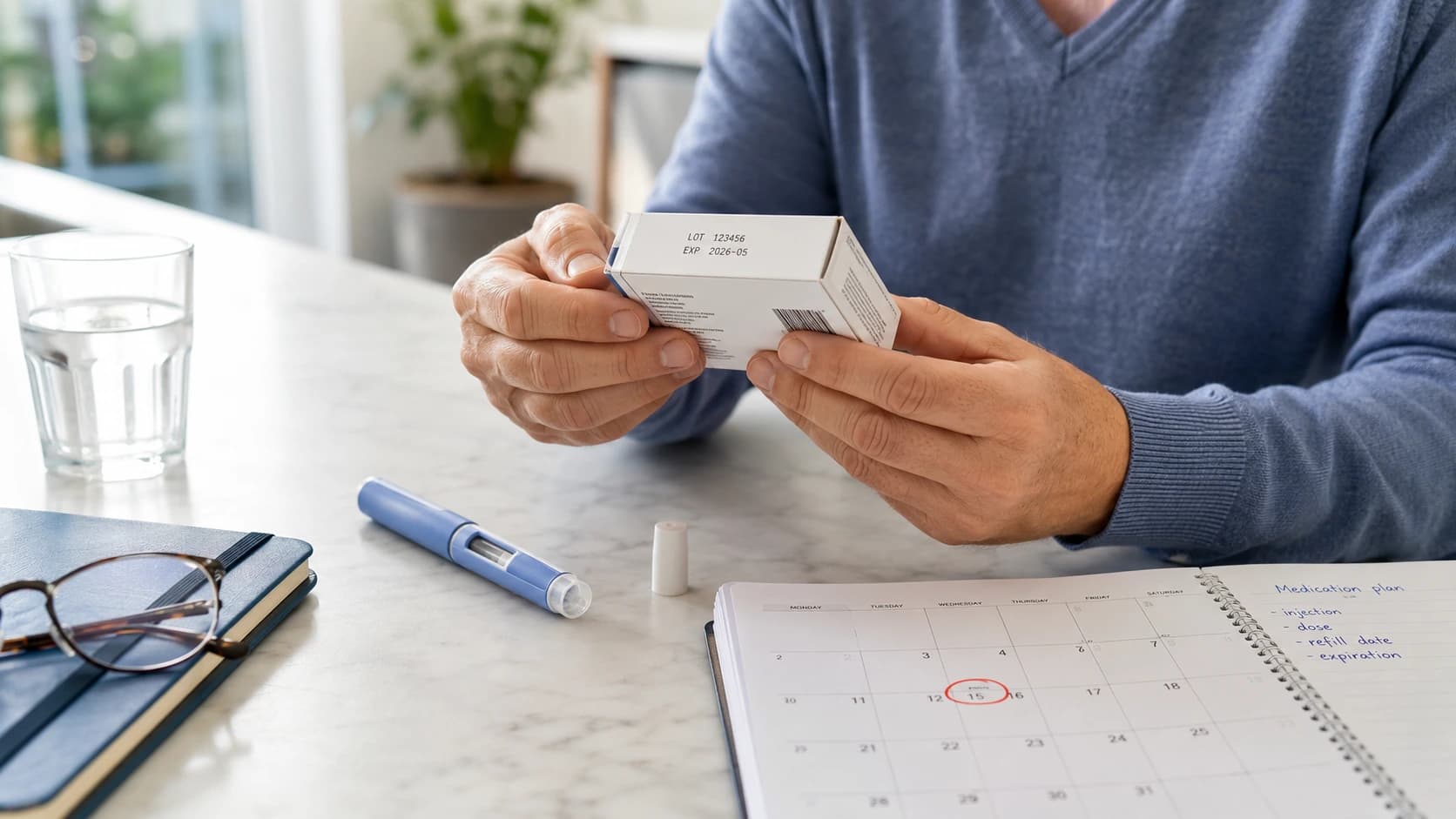
  • Expiration date: the manufacturer’s date for unopened medication stored correctly.

  • Beyond-use date: the pharmacy-assigned date for compounded medication.

  • In-use window: the time allowed after first use, first puncture, or first exposure to room temperature.

For example, an unused Ozempic pen may remain good until the printed expiration date if stored in the fridge. After first use, the same pen should be discarded after 56 days.

For compounded semaglutide, the pharmacy’s beyond-use date and puncture instructions are more important than general brand-based rules.

Visual Checks Before Use

Inspect semaglutide before each dose. Do not use it if you notice:

  • Cloudiness

  • Particles

  • Discoloration

  • Crystals

  • Damaged packaging

  • A cracked vial or pen

  • Evidence that the product has been frozen

  • Any unusual appearance compared with the product instructions

A normal appearance does not always guarantee full potency after improper storage, so temperature history still matters.

How Long Can Semaglutide Be Out of the Fridge?

How long semaglutide can be out of the fridge depends on the product.

Safe Room-Temperature Window During Travel

General manufacturer-based examples include:

  • Ozempic: after first use or exposure to room temperature, use or discard within 56 days if kept between 59 °F and 86 °F, or 15 °C–30 °C.

  • Wegovy single-dose pen or syringe: may be kept outside the refrigerator between 46 °F and 86 °F, or 8 °C–30 °C, for up to 28 days before use.

  • Compounded semaglutide: follow pharmacy instructions; room-temperature limits may be much shorter.

When traveling, keep semaglutide in your carry-on bag rather than checked luggage. Use an insulated medication case if needed, but avoid direct contact with ice packs, which may freeze the medication.

What To Do If Semaglutide Was Left Out Too Long

If semaglutide was left out longer than recommended, exposed to heat, or frozen:

  • Do not use it until you confirm whether it is still acceptable.

  • Check the product label or pharmacy instructions.

  • Contact your pharmacist, healthcare provider, or manufacturer support line.

  • Discard the product if instructed or if the temperature exposure is outside the allowed range.

If you are unsure how long the medication was out, it is safer to ask a professional before injecting it.

I Accidentally Took Expired Semaglutide — Steps To Take

Accidentally using expired semaglutide does not always mean harm will occur, but the medication may be less effective or its safety may be uncertain.

Effects of Possible Potency Loss

Expired or improperly stored semaglutide may not work as expected. This could affect blood sugar control, appetite regulation, or weight-management response.

After accidental use, consider:

  • Monitoring your blood sugar if you use semaglutide for diabetes

  • Watching for unexpected symptoms

  • Contacting your healthcare provider or pharmacist

  • Avoiding another dose until you receive guidance

Seek medical help promptly if you develop severe nausea, vomiting, dehydration symptoms, allergic symptoms, or concerning changes in blood sugar.

How GLP-1 Storage Rules Can Differ

Not all GLP-1 medications follow the same storage rules. Ozempic, Wegovy, liraglutide products, tirzepatide products, and compounded formulations may have different expiration dates, room-temperature limits, and in-use windows.

Always check the exact medication label and instructions for your product rather than applying rules from another GLP-1 medication.

Frequently Asked Questions

Does Semaglutide Expire If Left in the Fridge Past the Printed Date?

Yes. The printed expiration date applies only up to that date when the medication has been stored correctly. Do not use semaglutide after the printed expiration date unless your healthcare provider or pharmacist specifically tells you otherwise.

How Long Does Semaglutide Last in the Fridge After First Use?

How Long Can Semaglutide Be Out of the Fridge?

Is Compounded Semaglutide as Stable as Branded Semaglutide?

What Should I Do If I Accidentally Take Expired Semaglutide?

Disclaimer: This website connects patients with licensed healthcare providers who can evaluate medical conditions and prescribe medications when appropriate. Some medications available through this service may be compounded drugs, which are customized formulations prepared by a pharmacy. The FDA does not conduct premarket review for compounded drugs to evaluate their safety, effectiveness, or quality. (See here: https://www.fda.gov/consumers/consumer-updates/it-really-fda-approved). Individual results may vary, and these medications should only be used under the guidance of a qualified healthcare professional. The information in this article is for educational purposes only and should not be considered medical advice. Always consult your healthcare provider before starting any new treatment.

How we reviewed this article:
Sources
History

Helimeds has strict sourcing guidelines and relies on peer-reviewed studies, academic research institutions, and medical associations. We avoid using tertiary references. You can learn more about how we ensure our content is accurate and current by reading our editorial policy.

Share this post:

Related Posts